NASA Scientists Develop Compact Instrument for High-Fidelity Energetic Particle Measurements on CubeSats
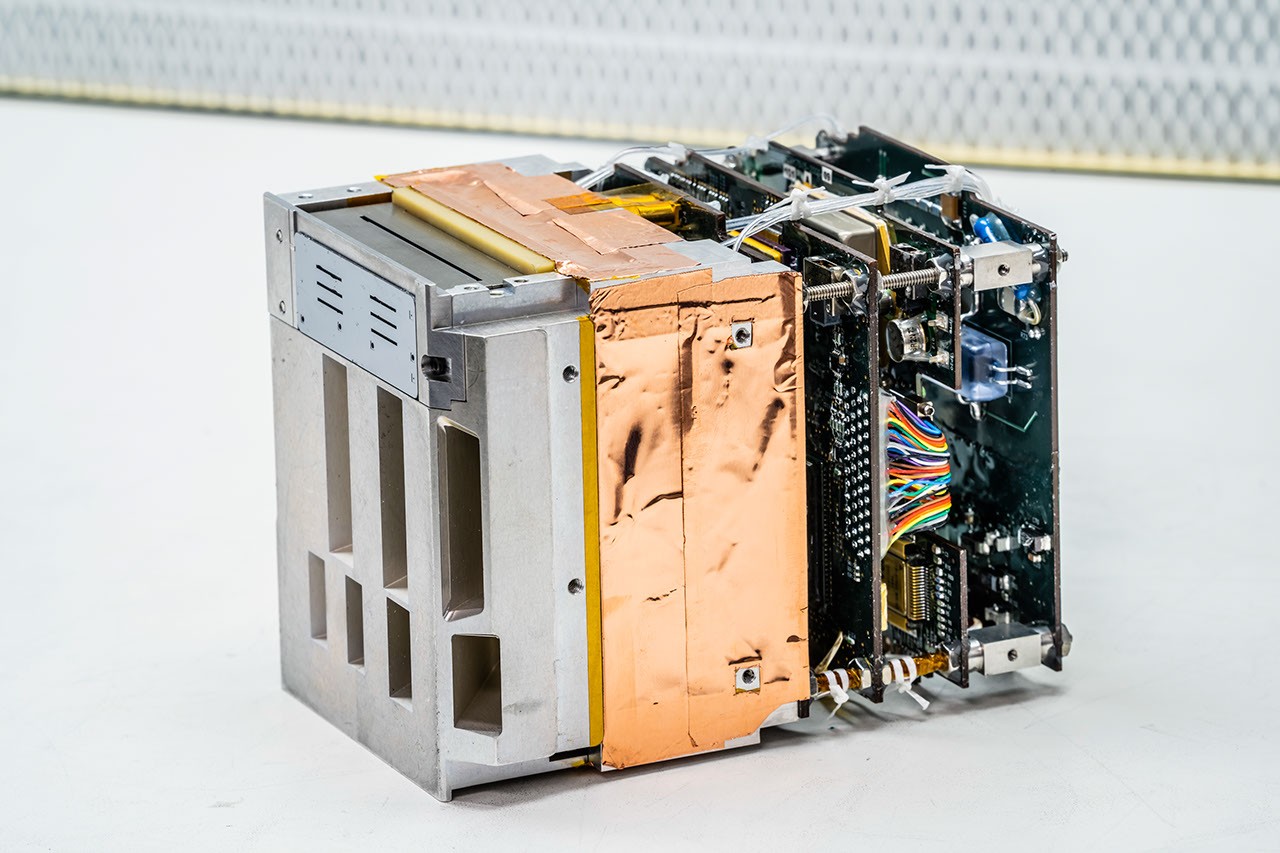
A team of NASA-sponsored scientists and engineers has created a new, compact instrument designed for high-fidelity measurements of energetic particles in near-Earth space. This innovative device incorporates miniaturized sensors into a multi-view particle detection system, representing a significant advancement in the field. The instrument, also named REAL, has been developed for NASA's Relativistic Electron Atmospheric Loss (REAL) CubeSat mission. It aims to provide more comprehensive data on energetic particles, which are crucial for understanding space weather and its effects. The miniaturization allows for integration into small satellite platforms like CubeSats, expanding the capabilities of these cost-effective missions. This development could lead to more detailed observations of phenomena such as radiation belts and atmospheric interactions. The REAL instrument's unique design facilitates a more complete understanding of particle dynamics and their impact on Earth's magnetosphere.
This technological advancement in miniaturized sensor technology for space missions addresses a critical need for more granular data on energetic particles. By enabling high-fidelity measurements on CubeSats, the REAL instrument democratizes access to sophisticated space physics research, potentially lowering the barrier to entry for scientific inquiry. The development highlights the ongoing trend of 'small-sats' becoming increasingly capable of performing complex scientific tasks previously reserved for larger, more expensive platforms. This shift has implications for future space exploration strategies, resource allocation in space agencies, and the potential for distributed sensor networks to provide unprecedented global coverage of space weather phenomena over the next decade.
AI-generated to prompt reflection — not editorial opinion, not advice, not a statement of fact. How this works.