NASA Tests Webbing Materials for Future Space Missions in Oxygen-Rich Environments
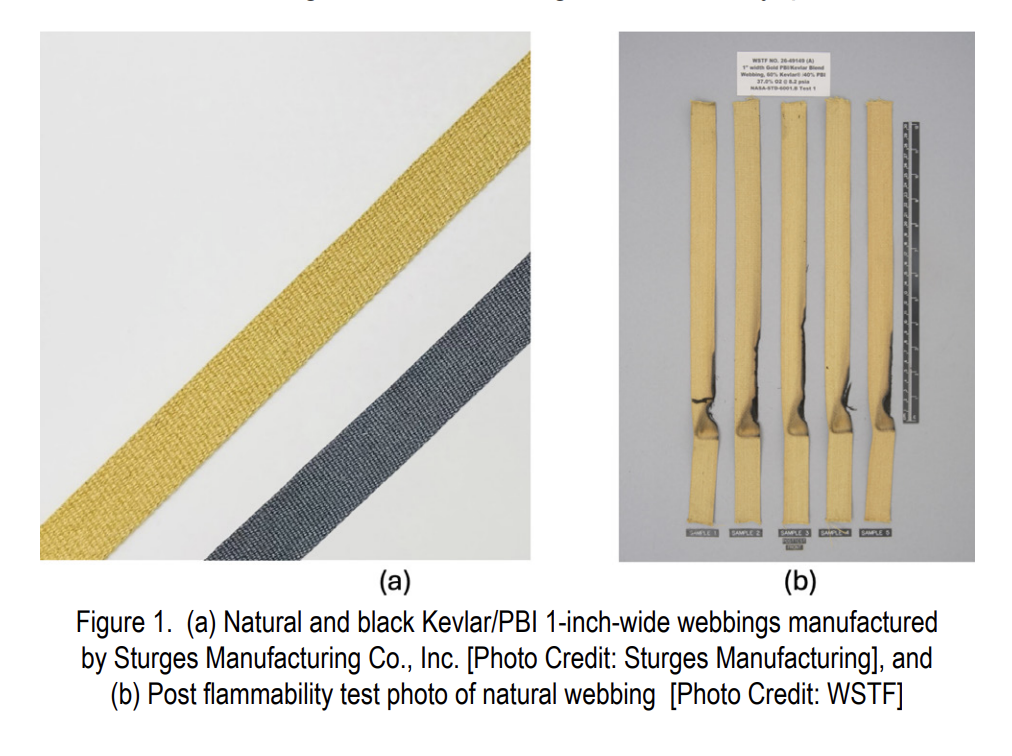
NASA has reported flammability test results for commercial webbings suitable for use in elevated oxygen environments, which are anticipated for future lunar and Martian missions. The testing focused on materials that meet NASA's stringent flammability requirements. A specific webbing composed of 60% Kevlar® and 40% polybenzimidazole (PBI) from Sturges Manufacturing Company, Inc., in its natural form, successfully passed flammability testing. This testing was conducted according to NASA-STD-6001B Test 1. The evaluation aims to ensure the safety and reliability of materials used in spacecraft, particularly in conditions with higher oxygen concentrations where flammability risks are amplified. These findings are crucial for the development of robust life support systems and equipment for deep space exploration.
The reported flammability testing of webbings for NASA's future lunar and Martian missions highlights a critical safety consideration in spacecraft design. As humanity ventures into environments with potentially higher oxygen concentrations, the selection of materials that mitigate fire risks becomes paramount. The successful passing of tests by a Kevlar®/PBI composite indicates progress in identifying suitable materials. This endeavor underscores the ongoing challenge of balancing material performance, durability, and safety under extreme conditions. Future developments may focus on further optimizing material compositions to enhance flame resistance while maintaining structural integrity and cost-effectiveness for long-duration space exploration.
AI-generated to prompt reflection — not editorial opinion, not advice, not a statement of fact. How this works.