NASA Unveils New Supercomputer 'Athena' to Aid Space Mission Planning
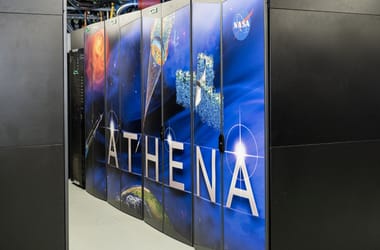
NASA has activated a new supercomputer named Athena, designed to significantly enhance the planning and execution of modern space missions. This powerful machine is expected to improve the accuracy of complex simulations required for deep space exploration and satellite operations. Athena's capabilities will allow scientists and engineers to model intricate scenarios with greater precision than previously possible. The supercomputer's processing power is equivalent to that of 22,000 laptops working together. This advancement is crucial for tackling the challenges of upcoming missions, including potential Mars expeditions and further studies of the solar system. By providing more robust computational resources, NASA aims to accelerate scientific discovery and ensure mission success. The integration of Athena represents a significant step forward in NASA's technological infrastructure, enabling more ambitious and data-intensive research. Its advanced processing will be instrumental in analyzing vast datasets generated by space probes and telescopes. The supercomputer's deployment underscores NASA's commitment to leveraging cutting-edge technology for space exploration.
The deployment of NASA's Athena supercomputer highlights the increasing reliance on advanced computational power for complex scientific endeavors. As space missions become more ambitious and data-rich, the need for sophisticated simulation and analysis tools intensifies. Athena's capabilities, equivalent to 22,000 laptops, suggest a significant leap in processing capacity, potentially enabling breakthroughs in mission design and scientific understanding. This investment reflects a strategic imperative to maintain technological leadership in space exploration, where computational prowess directly correlates with the feasibility and success of future objectives. The system's architecture and integration will be key factors in its long-term effectiveness and adaptability to evolving research demands over the next decade.
AI-generated to prompt reflection — not editorial opinion, not advice, not a statement of fact. How this works.