Natal's Solange Nunes Avenue Drainage Work Disrupts Traffic and Bus Routes
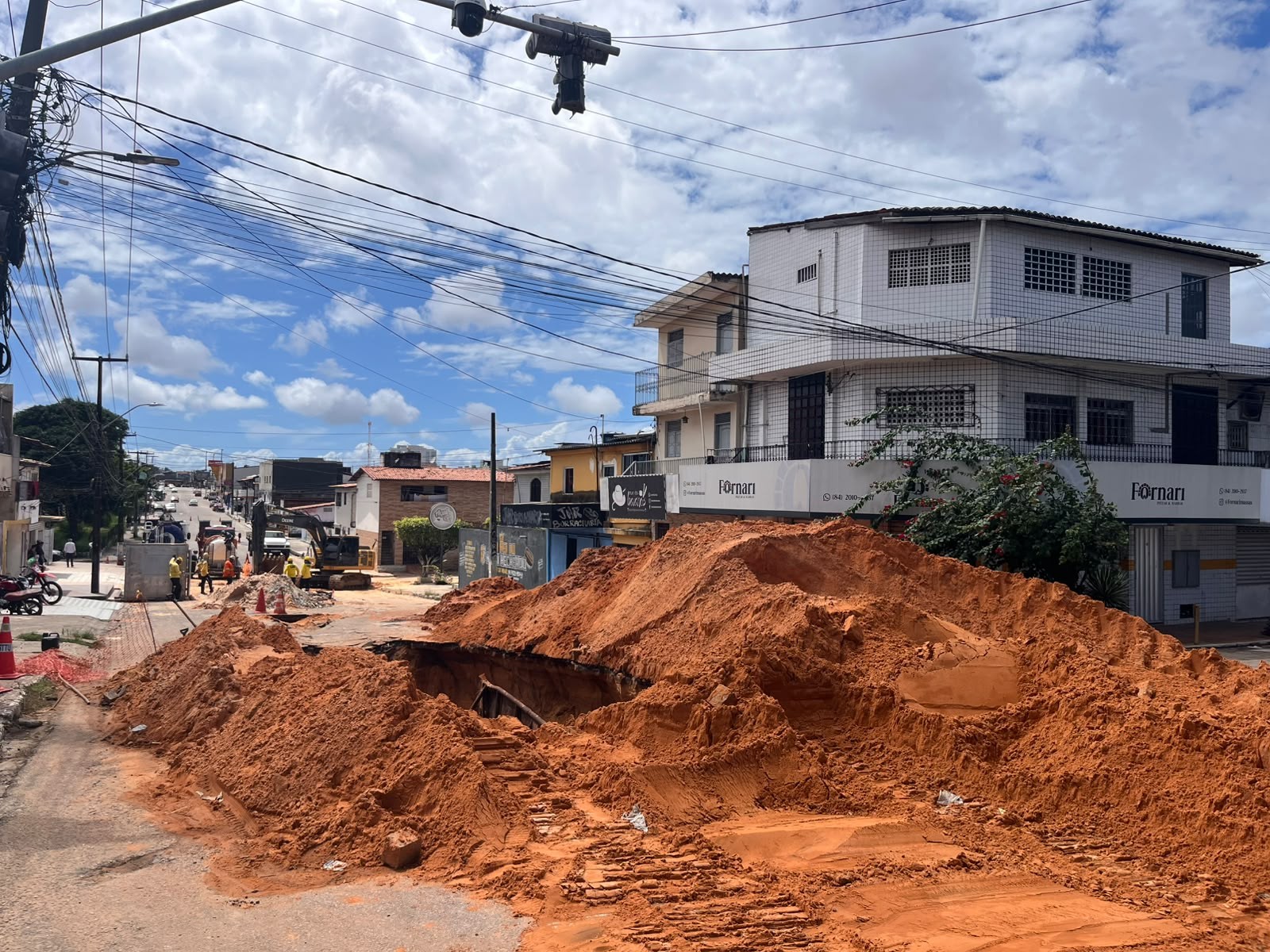
Drainage construction on Solange Nunes Avenue in Natal's West Zone has entered a new phase, causing significant disruptions to local traffic and bus routes. The Secretariat of Urban Mobility (STTU) has implemented temporary detours on the section between Piauí and Ceará avenues to ensure the safety of workers and drivers while maintaining traffic flow. The alterations primarily affect public transportation, with several bus lines experiencing modified itineraries for both inbound and outbound journeys. Specific changes have been detailed for lines O-38, O-39, O-40, O-41A, O-21, O-63, O-30, and 604, involving detours through various connecting avenues and streets. These modifications are temporary and aligned with the construction schedule. The STTU has deployed mobility agents to guide drivers and passengers and has installed provisional signage to indicate the new routes. Commuters are advised to plan their trips in advance and exercise caution when traveling through the affected area, adhering to the provided signage and traffic agent instructions.
The temporary traffic and transit rerouting in Natal due to drainage infrastructure work highlights the inherent tension between essential urban development projects and the immediate convenience of residents. While such projects are critical for long-term urban resilience and service improvement, their execution necessitates careful planning to mitigate short-term impacts. The STTU's approach of deploying agents and provisional signage aims to manage this transition, yet the effectiveness of such measures can be strained by unforeseen complexities or extended project timelines. Future urban planning initiatives could benefit from more robust predictive modeling of traffic impacts and enhanced public communication strategies, potentially leveraging real-time data to dynamically adjust routes and inform commuters more proactively. This situation underscores the ongoing challenge of balancing immediate mobility needs with the imperative for infrastructural modernization in a growing urban environment.
AI-generated to prompt reflection — not editorial opinion, not advice, not a statement of fact. How this works.