National Assembly Discusses Resolution on Social Media Accountability
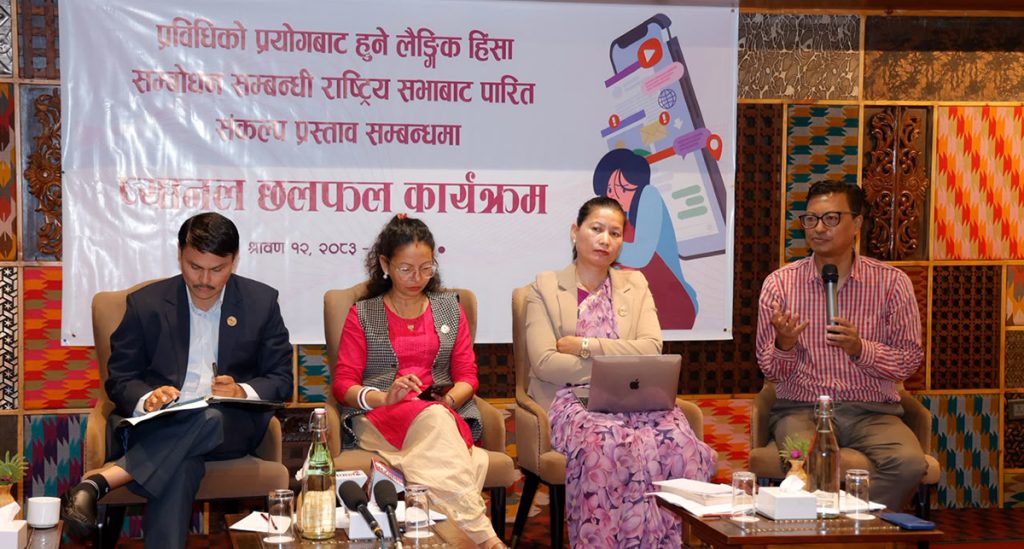
Stakeholders have emphasized the need to enact laws for social media accountability, taking into account international treaties and agreements. This discussion took place at a program organized by the Forum for Women, Law and Development (FWLD) in Kathmandu on Tuesday. The event focused on a resolution passed by the National Assembly concerning the addressing of gender-based violence through technological means. This resolution was unanimously approved by the National Assembly on June 17th. The participants highlighted that existing legal frameworks may not be sufficient to address the complexities of online gender-based violence. They stressed the importance of aligning national legislation with international standards to ensure effective regulation. The FWLD's initiative aims to foster a safer online environment by advocating for stronger legal protections. The discussion also touched upon the challenges in enforcing such laws in the digital age. Ultimately, the goal is to create a legal environment that holds social media platforms responsible for the content they host and the impact it has on users, particularly vulnerable groups.
The call for enhanced social media accountability, particularly concerning gender-based violence, reflects a growing global imperative to adapt legal frameworks to the digital age. As technology outpaces traditional regulatory structures, governments and civil society organizations face the challenge of balancing free expression with the need for user safety. International agreements provide a foundation, but their effective implementation requires robust national legislation that anticipates evolving online threats. This situation highlights a systemic tension between rapid technological advancement and the slower pace of legal and ethical adaptation. Future policy development will likely focus on defining platform responsibilities, improving content moderation mechanisms, and establishing clear avenues for redress for victims of online harm, all within the context of evolving digital governance models.
AI-generated to prompt reflection — not editorial opinion, not advice, not a statement of fact. How this works.