National Assembly Members Urge Government Attention on Public Security and Development
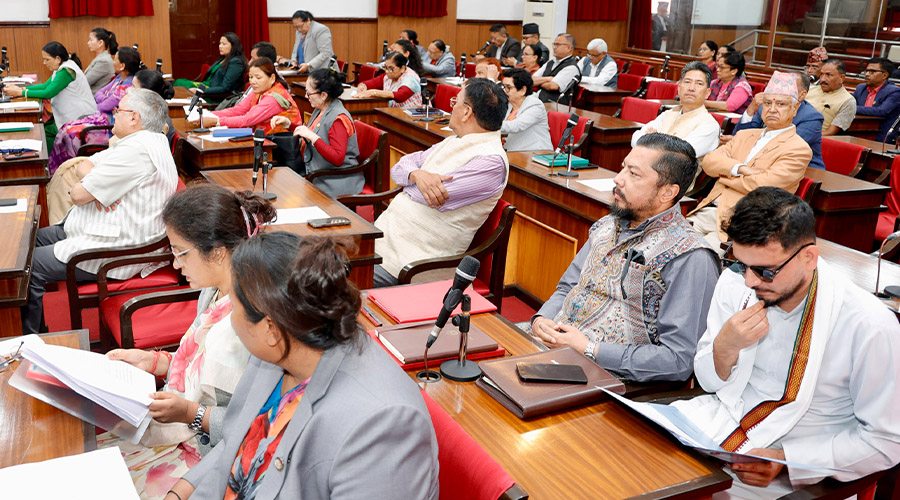
Members of Nepal's National Assembly have drawn the government's attention to pressing issues including public security, good governance, infrastructure development, and social justice. During the zero-hour session on Tuesday, lawmakers demanded government responses regarding various concerns, ranging from wildlife attacks to administrative inefficiencies and the slow pace of development projects. Specifically, MP Gita Devkota highlighted a recent incident in Bharatpur Metropolitan City-23, Chitwan, where a mother and son were attacked by a wild elephant known as 'Dhruve'. The lawmakers' collective concerns signal a broad range of challenges facing the nation that require urgent governmental action and accountability. They are seeking clear explanations and effective solutions from the administration to address these critical matters impacting citizens' lives and national progress. The issues raised underscore a need for improved public safety measures, streamlined administrative processes, and accelerated development initiatives across the country.
The National Assembly members' call for government attention highlights a common governance challenge where legislative bodies seek to hold the executive accountable for public welfare and development. This dynamic reflects the inherent tension between policy-making and implementation, particularly in areas prone to external factors like wildlife and systemic issues like administrative delays. The focus on public security, governance, and development indicates a broad societal expectation for state effectiveness. Moving forward, the government's response will be crucial in demonstrating its capacity to address these multifaceted concerns, potentially through policy reforms, resource allocation, and improved inter-agency coordination. The effectiveness of these measures will shape public trust and the trajectory of national progress in the coming years.
AI-generated to prompt reflection — not editorial opinion, not advice, not a statement of fact. How this works.