Nationalist Party Will Turn on Itself, Says NCP Leader
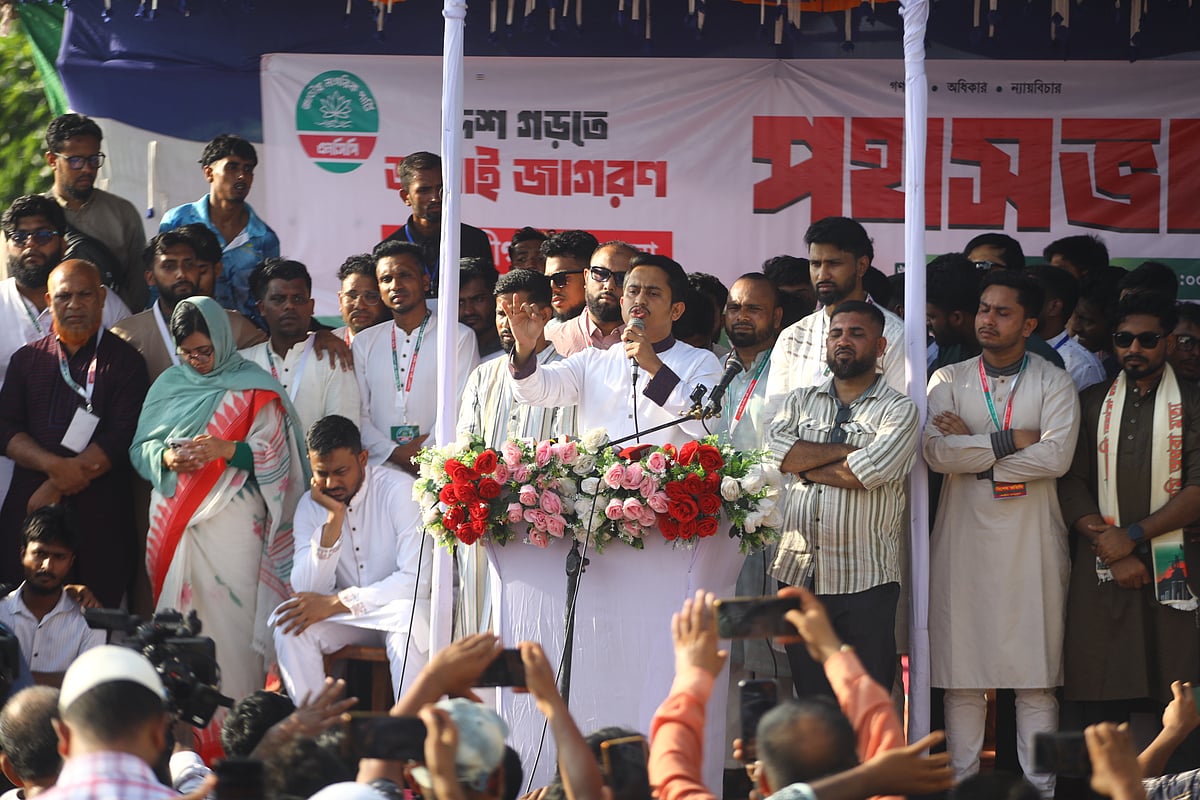
Sarjish Alam, chief organizer of the National Citizen Party (NCP) for the northern region, stated that the Bangladesh Nationalist Party (BNP) will eventually engage in internal conflict over power and resource distribution. He made these remarks during an NCP 'July March' rally in Companiganj Upazila, Sylhet, on Friday. Alam suggested that while a faction of the student wing and the BNP may be silent about the recent attack on the NCP, their internal power struggles will soon begin, leading to infighting during candidate selection for elections. He predicted that the BNP would then turn on itself without external provocation. The rally was attended by NCP chief coordinator Nasiruddin Patwari, reserved women's seat MP Mahmuda Mitu, and other Sylhet district and metropolitan BNP leaders. The comments follow an alleged attack by BNP members on NCP activists in Habiganj on Tuesday, which resulted in serious eye injury to Alif Chowdhury, a leader of the NCP's student wing, National Student Force. Doctors report that Chowdhury has lost vision in his left eye and has blurred vision in his right eye. Alam also criticized a faction within the BNP for alleged abuse of power, citing corruption in tenders for hospitals, educational institutions, and road construction, as well as extortion from contractors. He questioned why the remaining 95% of the BNP would bear responsibility for the actions of a corrupt 5%. Alam invoked past attacks and alleged persecution of the BNP under the Awami League, warning that if the BNP seeks to become a new autocracy, the NCP will resist, regardless of the perpetrator's position.
This event highlights the intense political fragmentation and rivalry within opposition parties in Bangladesh, particularly concerning resource allocation and influence. The NCP's accusations of internal corruption and power abuse within the BNP, coupled with warnings of self-inflicted conflict, suggest a strategic attempt to position the NCP as a principled alternative. The physical confrontation and injury to an NCP member underscore the volatile nature of political competition, where disputes over perceived dominance and resources can escalate. Looking ahead, the reliance on personalistic factions and allegations of corruption, rather than institutional reform, indicates a potential for continued instability and a struggle to build broad-based, policy-driven movements. The call for youth engagement in local elections, bypassing traditional party structures, reflects a broader trend of seeking new avenues for political participation amidst disillusionment with established parties.
AI-generated to prompt reflection — not editorial opinion, not advice, not a statement of fact. How this works.