NATO Summit Highlights Military Necessity Amidst Political Disunity
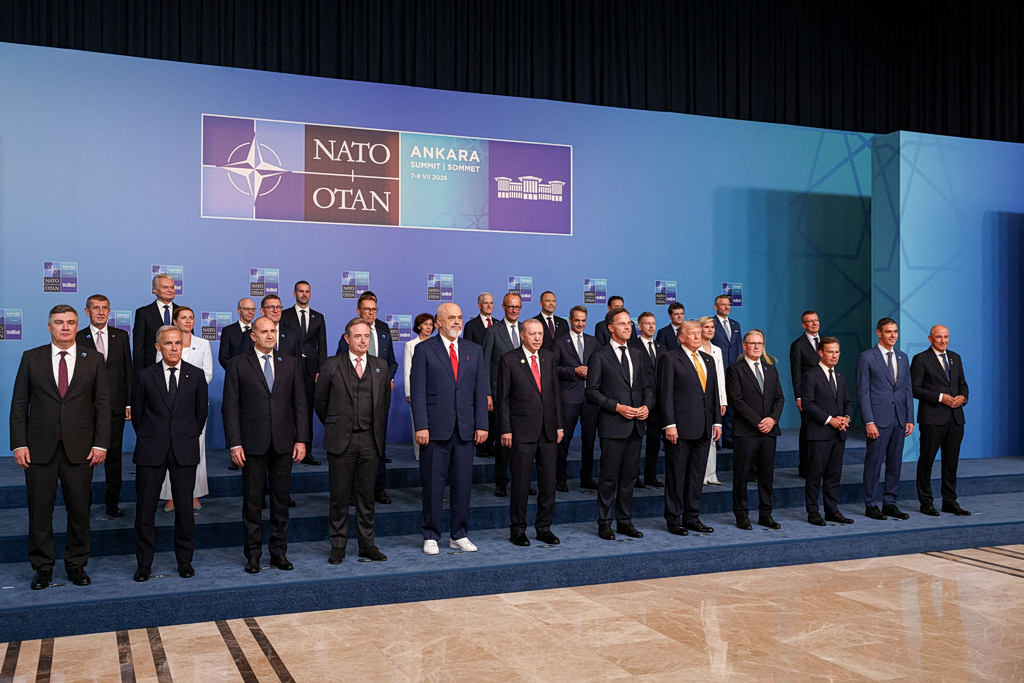
The recent NATO Summit in Ankara underscored a growing contradiction within the alliance: while its military indispensability remains clear, its political cohesion appears to be weakening. The summit revealed a significant rift between the United States and its European allies, which failed to narrow and instead manifested with notable intensity. A stark illustration of this division was evident in comments made by Donald Trump, though the specific nature of his remarks is not detailed in the provided text. This divergence suggests a complex dynamic where the strategic importance of NATO is increasingly challenged by internal political disagreements among member states. The alliance faces the dual challenge of maintaining its military readiness and operational effectiveness while navigating these deepening political fault lines. The events at the Ankara summit signal a critical juncture for NATO's future, requiring careful consideration of how to bridge the gap between its essential security role and the evolving political landscape among its members.
The NATO Summit in Ankara revealed a persistent tension between the alliance's enduring military relevance and its apparent political fragmentation. While the strategic necessity of NATO for collective security remains undiminished, internal disagreements, particularly between the US and European members, are creating significant friction. This dynamic suggests that the alliance's future effectiveness may depend not only on military capabilities but also on its ability to foster political consensus and manage divergent national interests. The challenge for NATO will be to reconcile these internal political divergences with its external security mandates, ensuring that its operational strength is not undermined by a lack of unified political will. Future strategic planning must account for this dual imperative, seeking mechanisms to strengthen political cohesion alongside military preparedness.
AI-generated to prompt reflection — not editorial opinion, not advice, not a statement of fact. How this works.