Nature's Sophisticated Communication Networks Revealed
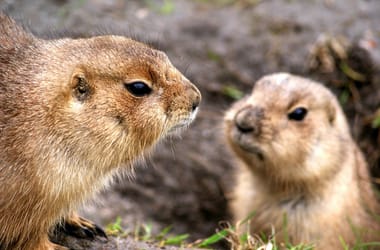
Beyond the well-known bee dances indicating food sources, new research highlights other complex natural communication systems. Bees also use pheromone trails left by their feet to guide others. Scientists have confirmed that prairie dogs not only warn their colony about danger but can also convey specific details about the predator, including its size, shape, and even color. A new documentary series is exploring these fascinating examples of nature's pre-existing information networks. One particularly striking instance involves fungi sending instructions to ants. These discoveries demonstrate that nature established its own intricate communication and information-sharing systems long before humans developed theirs. The series aims to showcase the advanced methods organisms use to interact and share vital information within their ecosystems.
This documentary explores the sophisticated communication strategies evolved by non-human species, predating human language and technology. These natural information networks, involving chemical signals, physical trails, and complex vocalizations, demonstrate advanced information processing and transmission. The findings challenge anthropocentric views by highlighting the deep evolutionary roots of complex signaling systems. Understanding these biological networks could offer insights into decentralized communication, efficient resource allocation, and robust information sharing, potentially inspiring future human technological designs in areas like swarm robotics or secure data transmission. The series prompts reflection on how human systems might learn from nature's long-established, resilient communication paradigms.
AI-generated to prompt reflection — not editorial opinion, not advice, not a statement of fact. How this works.