Near Tragedy Averted on London-Athens Flight Due to Pilot Calculation Error
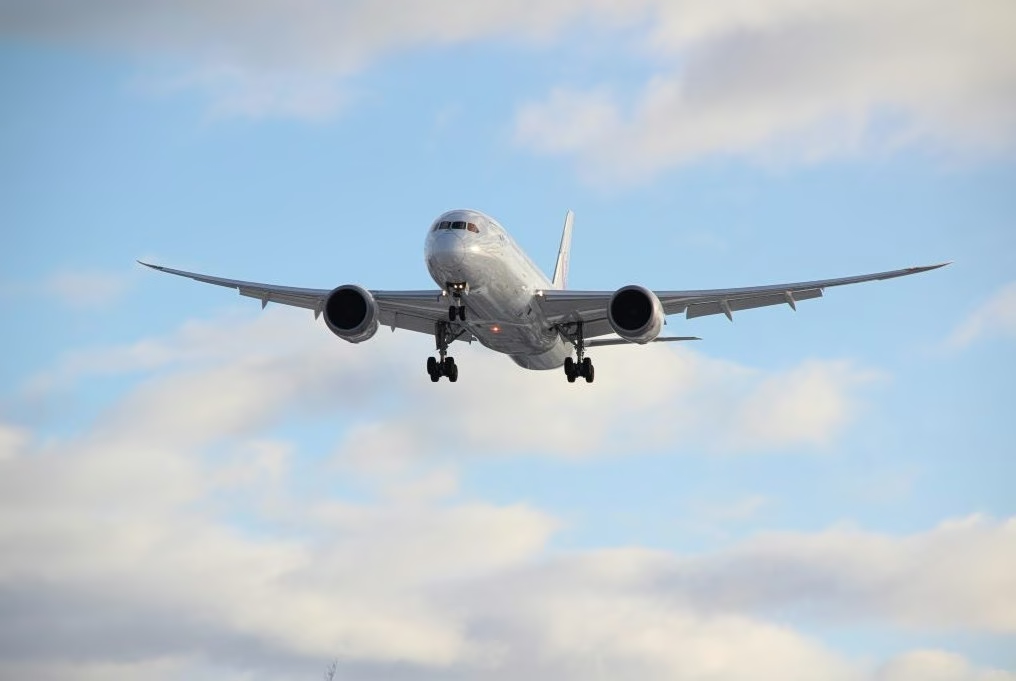
A Boeing aircraft carrying 162 passengers narrowly avoided a potential tragedy on a flight from London to Athens. According to a report from Corriere della Sera, a critical miscalculation by the pilots almost sent the plane onto railway tracks. The incident was reportedly averted by a margin of mere seconds. The specific nature of the calculation error and the precise sequence of events leading to the near-disaster have not been fully detailed. However, the report highlights the severity of the situation, emphasizing how close the aircraft came to a catastrophic outcome. The intervention that prevented the disaster, whether by automated systems or pilot correction, occurred in the final moments. The incident underscores the high stakes involved in aviation and the importance of precise execution in flight operations.
This incident highlights the critical importance of pilot training and the robustness of aircraft safety systems. While the report suggests a pilot error, the near-miss also points to the layered safety protocols designed to catch and correct such deviations before they become critical. The rapid response required to avert disaster underscores the need for continuous evaluation of crew resource management and automated system integration in aviation. Future considerations may involve enhanced simulation training for rare but high-consequence events and further refinement of warning systems to provide pilots with more time for corrective action, ensuring safety margins are maintained even under extreme pressure.
AI-generated to prompt reflection — not editorial opinion, not advice, not a statement of fact. How this works.