Nearly 100,000 Argentines in Brazil Support National Team Amid Online Rivalry
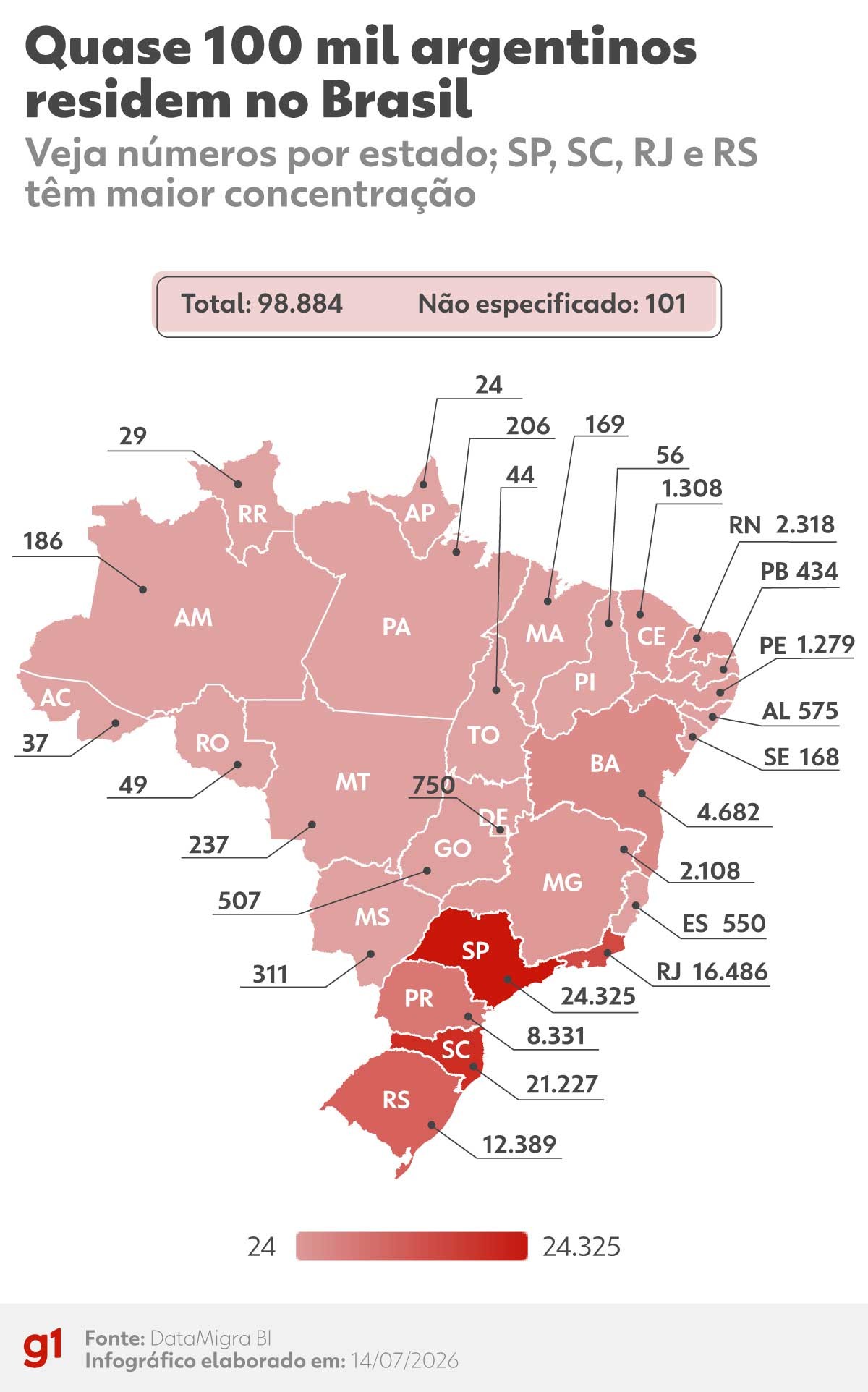
As Argentina faces England in the World Cup semifinals, an estimated 98,884 Argentinian citizens residing in Brazil are expected to support their national team. These residents are spread across Brazil, with the largest communities located in São Paulo (24,300), Santa Catarina (21,200), Rio de Janeiro (16,400), and Rio Grande do Sul (12,300). In São Paulo, a specific neighborhood has become a hub for Argentinians and supportive Brazilians, with a restaurant serving as a popular gathering spot for fans. While a festive atmosphere exists among some supporters, social media platforms have become a battleground for digital taunts and historical rivalries. Following Brazil's elimination, memes and videos criticizing Argentina have proliferated online. A significant point of contention on social media involves accusations of racism against Argentinian fans, stemming from incidents at matches. FIFA has condemned such behavior, stating that racism, hate, and discrimination have no place in football or society. Argentinians living in Brazil report experiencing discomfort and facing generalizations due to these incidents. One cultural producer living in São Paulo shared that his Brazilian son was upset by classmates labeling all Argentinians as racist and sexist. He expressed shame and indignation at racist actions by some fans but also concern over the generalization of an entire nation, emphasizing that Argentina is more than its worst examples and advocating for dialogue over xenophobia. An anonymous Argentinian engineer in Rio de Janeiro noted an increase in offenses directed at him, attributing it to the actions of a few, and stated he avoids certain places due to being judged based on other Argentinians' behavior.
The narrative surrounding the Argentina vs. Brazil World Cup match highlights a complex interplay between national identity, sporting rivalry, and social issues. While the presence of a large Argentinian diaspora in Brazil offers a unique cross-cultural dynamic, the surge in online animosity and accusations of racism underscores the challenges of managing public discourse in the digital age. The situation prompts reflection on how collective identity can be both a source of solidarity and a basis for harmful stereotyping. It also raises questions about the responsibility of individuals and institutions in combating prejudice, both within fan bases and in broader societal interactions. Moving forward, fostering environments that encourage nuanced understanding and discourage xenophobic generalizations, while still addressing legitimate concerns about discriminatory behavior, will be crucial for maintaining healthy inter-group relations.
AI-generated to prompt reflection — not editorial opinion, not advice, not a statement of fact. How this works.