Nearly 160 Migrants Rescued After Boat Fire During Channel Crossing
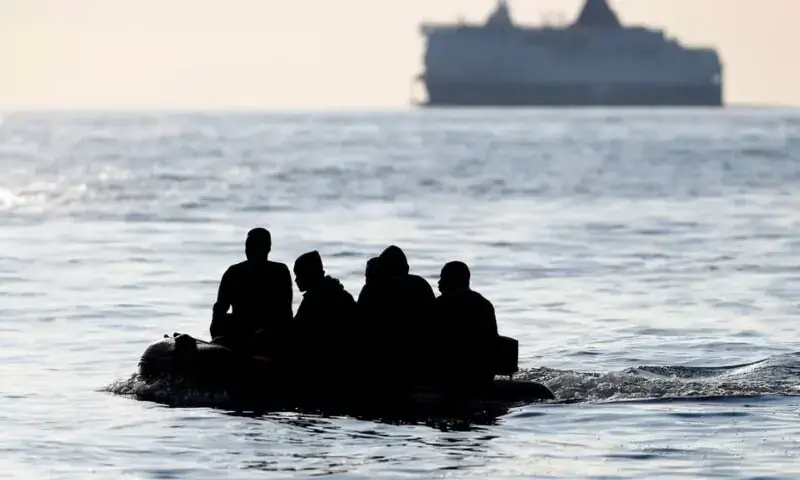
French and British maritime authorities successfully rescued 157 migrants when their small boat caught fire while attempting to cross the English Channel on Tuesday. The incident occurred in waters near the border between French and British territorial seas, prompting occupants to abandon the vessel by jumping overboard. Fortunately, no casualties were reported following the rescue operation, which is noted as one of the largest of its kind since record-keeping began in 2018. The migrants had departed from Veules-les-Roses, a coastal village in Normandy, on Monday. Vessels from both the UK Coastguard and the Royal National Lifeboat Institution (RNLI) were involved in the response, with an RNLI lifeboat launching at 6:00 AM. Recent observations suggest an increase in the size of dinghies used for these crossings, with some reported to be up to 12 meters long, compared to the usual 8-10 meters. French maritime authorities also indicated a rise in the average number of people per boat, increasing from 26 in 2021 to 65 so far this year. The English Channel remains a perilous route for migrants seeking to reach the UK, with thousands of dollars paid to smugglers for passage on overloaded vessels. Last year, over 41,000 migrants arrived on England's southern coast, and tragically, 14 individuals have died attempting the crossing this year, with at least 29 fatalities recorded in 2022.
This event highlights the persistent and perilous nature of irregular migration across the English Channel, underscoring the ongoing challenges faced by both migrants and rescue services. The increasing number of individuals per vessel and the use of larger boats suggest a dynamic response to interdiction efforts, potentially indicating a shift in smuggling tactics. The significant number of rescues and reported fatalities underscore the high-risk environment created by demand for passage and the supply of smuggling services. Future policy considerations may need to address the root causes of migration and explore more effective, humane alternatives to current transit routes, while also considering the systemic incentives that drive these dangerous journeys. The strain on cross-border rescue coordination also points to the need for robust international cooperation frameworks.
AI-generated to prompt reflection — not editorial opinion, not advice, not a statement of fact. How this works.
