Nearly 49,000 Students Lagging in Amazonas, Brazil, Due to Access Challenges
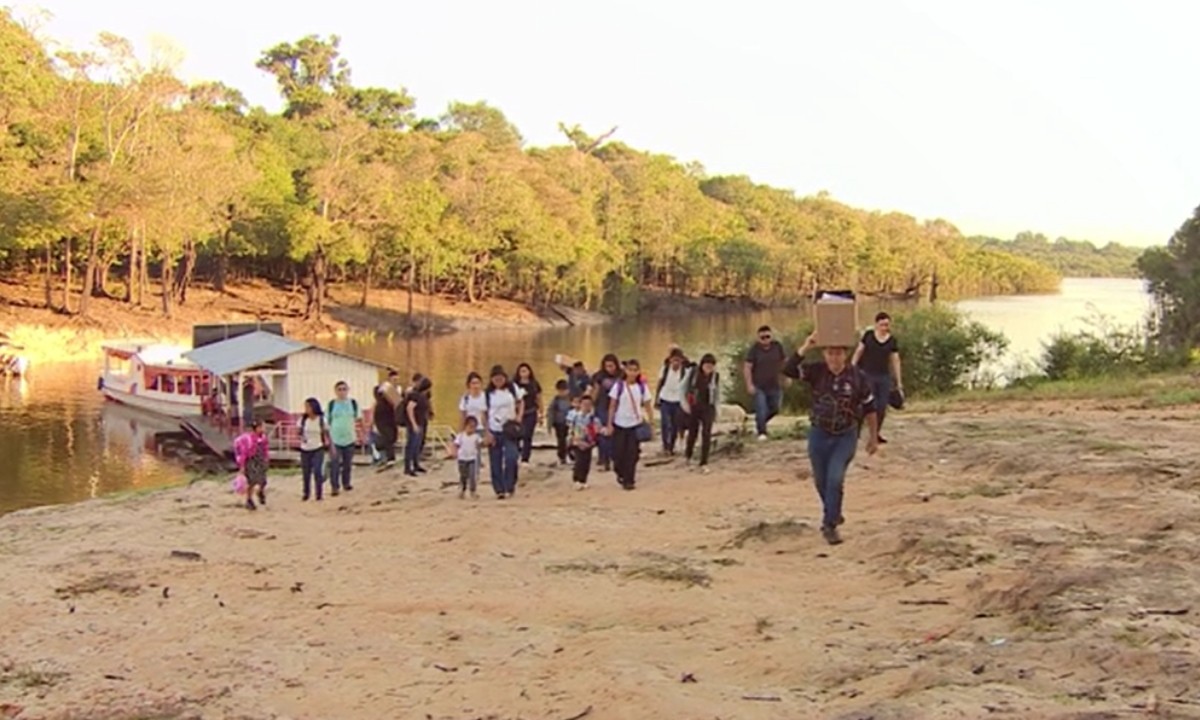
In the Brazilian state of Amazonas, approximately 48,918 students are experiencing age-grade distortion, meaning they are older than the expected age for their current grade level. This issue significantly impacts students in rural and riverside communities, where geographical distance and difficult access to educational facilities contribute to academic delays. While Brazil has seen a 27.9% decrease in age-grade distortion in high school between 2022 and 2025, the Northern Region, including Amazonas, still has the highest concentration at 24.3%.
Factors contributing to this educational gap include long travel distances, inadequate transportation, seasonal droughts affecting river navigation, frequent family relocations, and late school enrollment. In riverside communities, students often start their day very early, with boats sometimes collecting them from their homes. However, these logistical hurdles lead many to drop out, fail, or fall behind academically. The director of a municipal school in Manaus, Roberta Barros, noted that river droughts force families to move, disrupting students' education and often leading to study interruptions. School calendars and schedules are frequently adjusted to accommodate the fluctuating river levels, ensuring students can reach schools safely. Education specialist Ernesto Faria highlighted that the Amazon's unique logistical challenges make student retention difficult, citing transportation issues during dry seasons and the high cost of student support. He also pointed to late enrollment and the persistent culture of grade repetition in Brazil as significant problems.
Students like 12-year-old Alice Magalhães, who missed a year of school due to her mother's concerns about distance, and Gabriela Tavares Magalhães, who faced transportation issues, illustrate these challenges. Both students, now in the sixth grade, took a leveling test and were placed in a grade appropriate for their learning level, though they express some apprehension about advancing further. To combat dropout rates and further delays, riverside schools are adapting their routines, with earlier start and end times to accommodate students' travel by river.
The data from Amazonas highlights systemic challenges in providing equitable education in geographically vast and environmentally dynamic regions. The core issue appears to be a mismatch between educational infrastructure and the logistical realities faced by students in remote areas, exacerbated by environmental factors like drought and flood cycles. This situation creates a cycle where mobility, access, and retention are intrinsically linked to natural conditions, demanding adaptive educational policies and significant investment in transportation and support systems. The analysis suggests that without addressing these fundamental logistical barriers, efforts to improve educational outcomes will remain constrained, particularly for vulnerable populations in the Amazon basin. Future strategies may need to integrate localized, flexible educational models that account for environmental variability and community mobility patterns, rather than imposing standardized urban-centric approaches.
AI-generated to prompt reflection — not editorial opinion, not advice, not a statement of fact. How this works.