Neck and Spine Pain Surges 52% in São Paulo Over Four Years
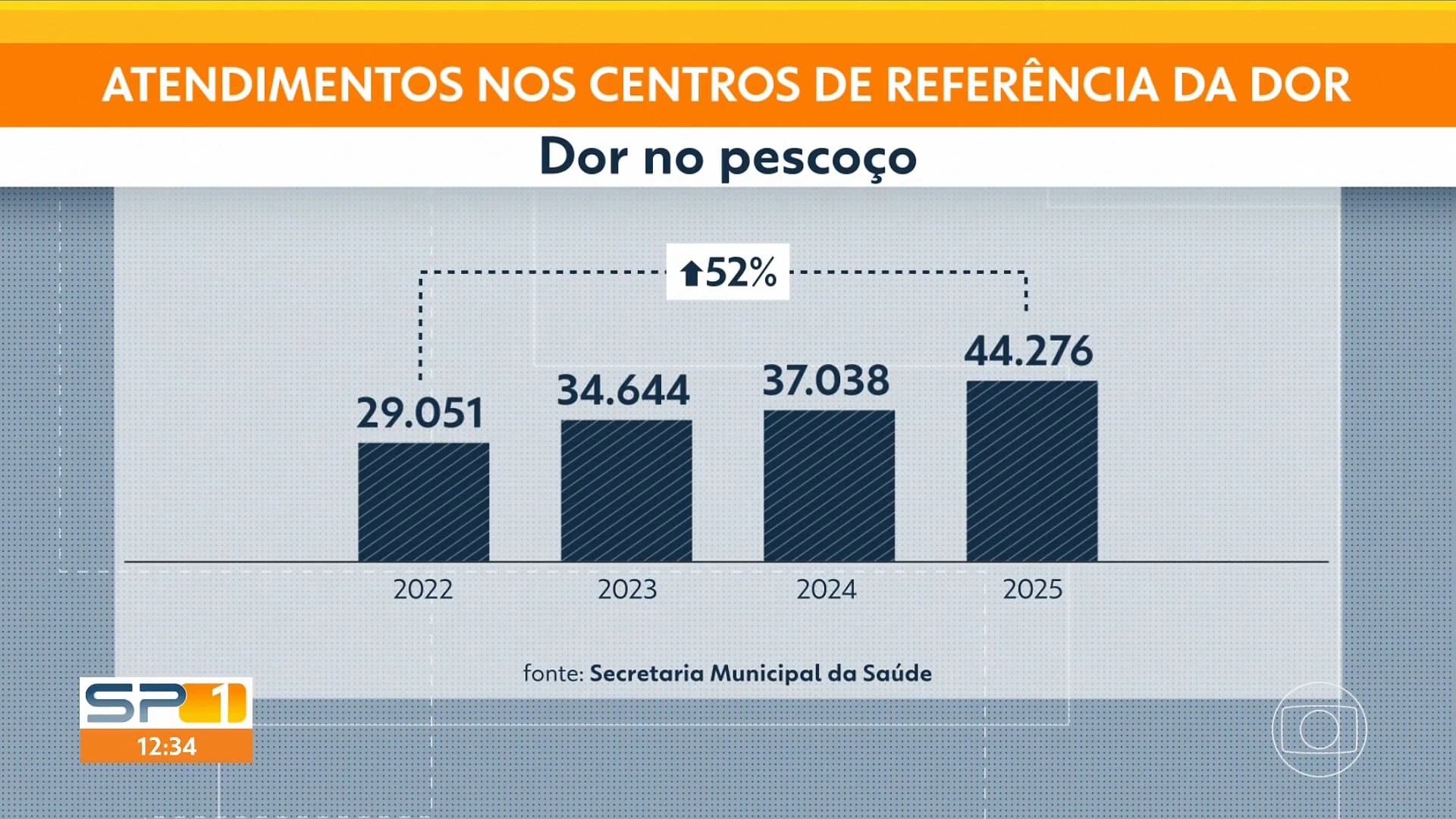
The number of patients seeking treatment for neck and spine pain in São Paulo has risen by approximately 52% in the last four years, according to data from the municipal health secretariat. This increase is attributed to factors such as prolonged mobile phone use, sedentary lifestyles, and poor posture. Specifically, cases of lower back pain have seen a nearly 55% increase during the same period. Dr. Fábio Soler, an acupuncturist at the Parque Maria Helena Pain Reference Center, noted the rise in demand for treatments like physical therapy and Pilates. He explained that holding one's head down to use a mobile phone can add up to 27kg of pressure on the spine, leading to pain and potential long-term health damage. Physiotherapist Marcelo Lima added that poor sleep quality exacerbates these pains. He emphasized that simple daily exercises and stretching can help prevent the onset of such discomfort. Between 2021 and May 2026, São Paulo's six Pain Reference Centers, which handle referrals from Basic Health Units for cervical pain complaints, recorded a total of 774,611 patient visits.
The significant increase in neck and spine pain in São Paulo highlights a growing public health challenge linked to modern lifestyle habits. The pervasive use of mobile devices and sedentary work environments, coupled with insufficient physical activity, creates a confluence of biomechanical stressors on the human musculoskeletal system. This trend suggests a systemic issue where technological convenience and urban living patterns may be inadvertently undermining long-term physical well-being. Addressing this requires a multi-pronged approach, potentially involving public health campaigns promoting ergonomic awareness, accessible physical activity programs, and perhaps even design considerations for digital devices and workspaces to mitigate strain. Over the next decade, as technology integration deepens, proactive interventions will be crucial to prevent these prevalent pain conditions from becoming an even greater burden on individuals and healthcare systems.
AI-generated to prompt reflection — not editorial opinion, not advice, not a statement of fact. How this works.