Nelson Mandela's 1991 Visit to Brasília: A Diplomatic Mission for Anti-Apartheid Support
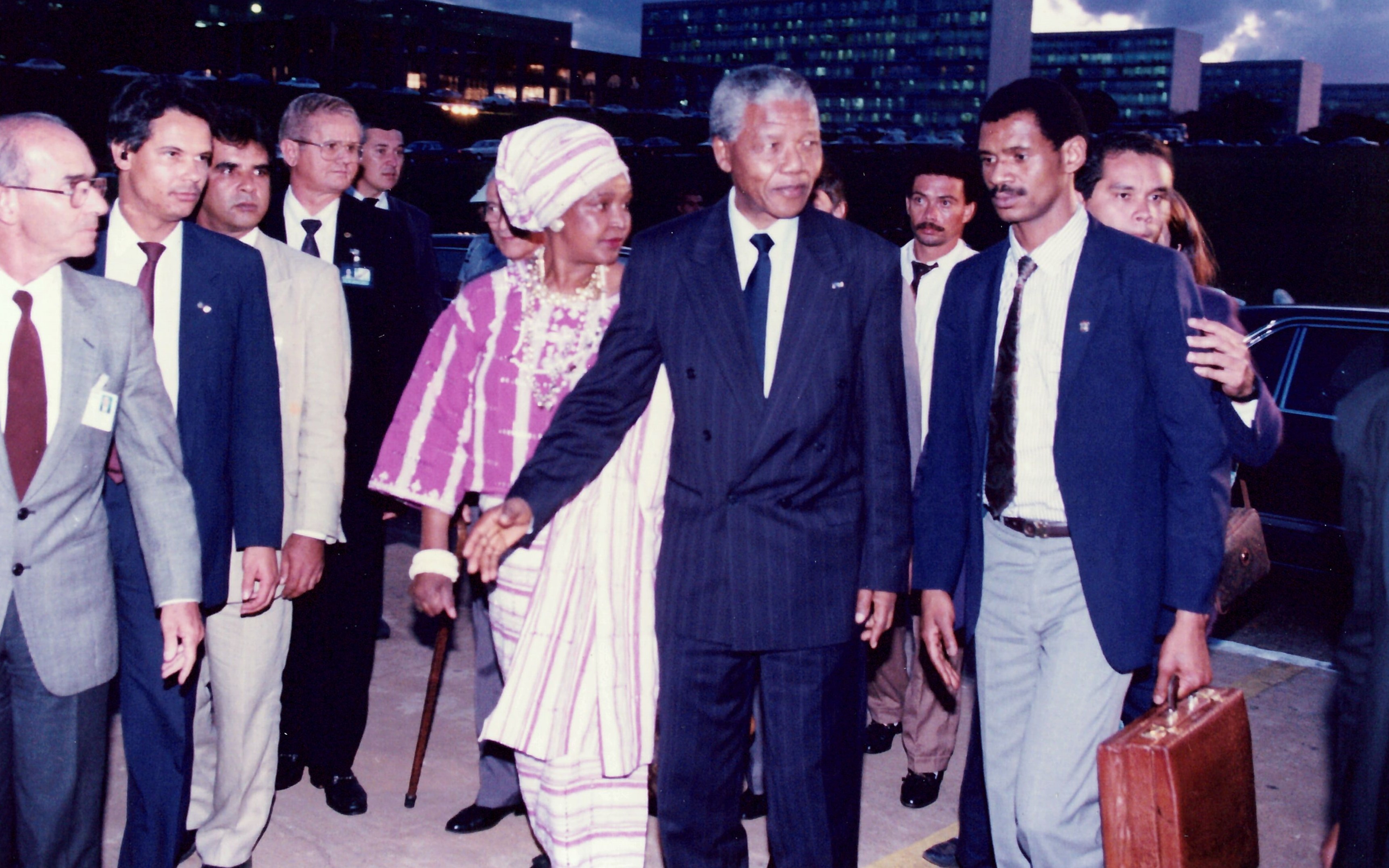
In August 1991, Nelson Mandela made a significant visit to Brasília, Brazil, just six months after his release from prison in South Africa. His trip included stops at the University of Brasília (UnB) and the National Congress. At UnB, on August 5, 1991, Mandela, accompanied by his wife Winnie Mandela and then-rector Antonio Ibanez Ruiz, was awarded an honorary doctorate. The visit to the National Congress occurred on August 4, 1991, where Mandela delivered a speech to Brazilian parliamentarians. According to the Memorial da Democracia, this visit was a strategic move to garner support from international governments for the anti-apartheid struggle and to prepare for his candidacy in the 1994 South African presidential election. Mandela, who was imprisoned from August 5, 1962, to February 11, 1990, for his fight against the racist apartheid regime, emphasized the importance of global solidarity against racism in his address. He stated, "The challenge for all of us who fight racism is to join hands in solidarity and support wherever it may be necessary, so that we can sweep it from the face of the Earth completely." Mandela's activism began in the 1940s, leading to his involvement with the African National Congress and his eventual imprisonment. He was released at age 71 as the apartheid regime began to dismantle. In 1993, he shared the Nobel Peace Prize with Frederik Willem de Klerk and served as President of South Africa from 1994 to 1999, passing away in 2013 at the age of 95.
Nelson Mandela's 1991 visit to Brasília highlights the critical role of international diplomacy in advancing human rights and democratic transitions. The visit, occurring shortly after his release and prior to South Africa's first multiracial elections, underscores the global nature of the anti-apartheid movement and Mandela's strategic efforts to build a coalition of support. By engaging with governmental bodies and academic institutions in Brazil, Mandela sought to leverage international pressure and resources to dismantle the apartheid regime. This event demonstrates how personal advocacy, combined with institutional engagement, can amplify the impact of liberation movements on the world stage. In the context of evolving global governance and the increasing interconnectedness of nations, such diplomatic overtures remain essential for addressing systemic injustices and fostering international cooperation towards shared values of equality and freedom.
AI-generated to prompt reflection — not editorial opinion, not advice, not a statement of fact. How this works.