Nepal Advances ILO Forced Labor Convention in Parliament
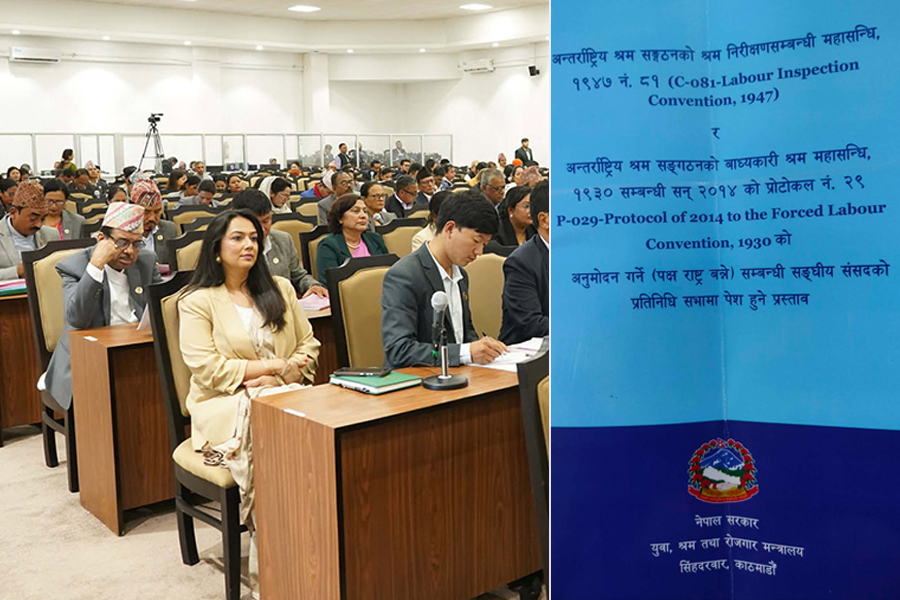
Nepal is moving forward with the International Labour Organization's (ILO) Forced Labour Convention in its Parliament. Minister of Youth, Labour and Employment Ramji Yadav presented two related conventions in the House of Representatives. The agenda to advance these conventions was set for Monday's meeting of the House of Representatives. Specifically, the 2014 Protocol concerning the ILO's Forced Labour Convention, 1930, is being considered. This legislative step signifies Nepal's commitment to addressing and eradicating forced labor within its borders and in alignment with international standards. The convention aims to ensure that all individuals are free from forced or compulsory labor, promoting decent work and human rights. The parliamentary process will involve deliberation and potential ratification of the protocol. This move is expected to strengthen national laws and enforcement mechanisms against forced labor practices. The government has indicated its intent to uphold international labor standards and protect vulnerable populations from exploitation. Further details on the specific provisions of the protocol and its implications for Nepal are anticipated as the parliamentary discussion progresses.
Nepal's parliamentary advancement of the ILO's Forced Labour Convention, 1930, and its 2014 protocol represents a significant step in aligning national labor practices with international human rights standards. This legislative initiative addresses systemic issues of exploitation and aims to strengthen governance frameworks designed to protect workers. By engaging with international conventions, Nepal signals a commitment to improving labor conditions and potentially enhancing its global standing in human rights. The process underscores the interplay between national sovereignty and international cooperation in tackling complex social challenges like forced labor, driven by economic pressures and governance gaps. Future effectiveness will depend on robust implementation, enforcement, and public awareness campaigns to ensure the convention's principles translate into tangible protections for all workers.
AI-generated to prompt reflection — not editorial opinion, not advice, not a statement of fact. How this works.