Nepal Parliament to Pass Four Ordinance Replacement Bills Today
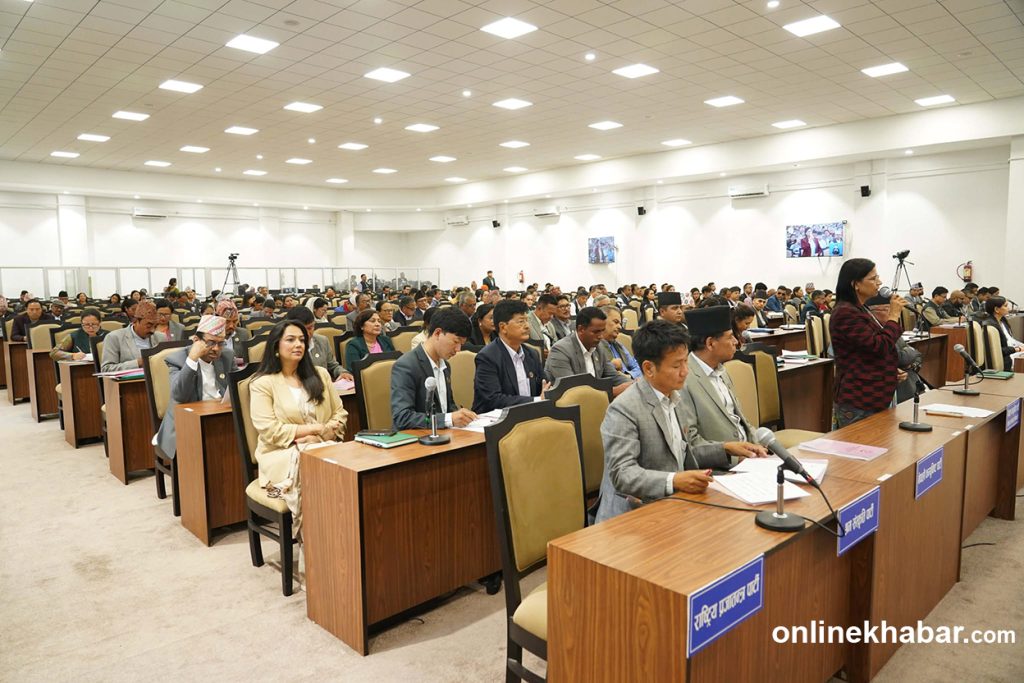
The Parliament of Nepal is scheduled to pass four bills replacing existing ordinances today, June 18th. The agenda includes a proposal by Law, Justice, and Parliamentary Affairs Minister Sobita Gautam, representing Prime Minister Balendra Shah, to conduct clause-by-clause discussions on the 'Public Procurement (Second Amendment) Bill, 2083'. This bill is one of the four ordinance replacement bills slated for passage. The session aims to finalize these legislative changes, which are crucial for aligning existing regulations with parliamentary approval. The specific details of the other three bills are not provided in the initial agenda, but their passage is expected within the same parliamentary session. The government is prioritizing the swift enactment of these bills to ensure legal continuity and address any potential gaps arising from the transition from ordinances to fully legislated acts. The proceedings are taking place in the House of Representatives.
The legislative agenda in Nepal's House of Representatives highlights a procedural step to formalize government ordinances into law. This process, while standard for parliamentary democracies, underscores the executive's reliance on ordinance powers between sessions and the subsequent need for legislative ratification. The swift passage of these bills suggests a consensus or a government priority to solidify these legal frameworks. From a governance perspective, the efficiency of this process can be analyzed in terms of legislative capacity and the balance of power between the executive and the legislature. The inclusion of the Public Procurement (Second Amendment) Bill indicates a focus on economic and administrative reforms, which will be critical in shaping Nepal's market dynamics and public sector efficiency over the next decade. The effectiveness of these amendments will depend on their implementation and their ability to foster transparency and competition in public spending.
AI-generated to prompt reflection — not editorial opinion, not advice, not a statement of fact. How this works.