Nepal's Development Spending Trails Far Behind Annual Budget Allocation
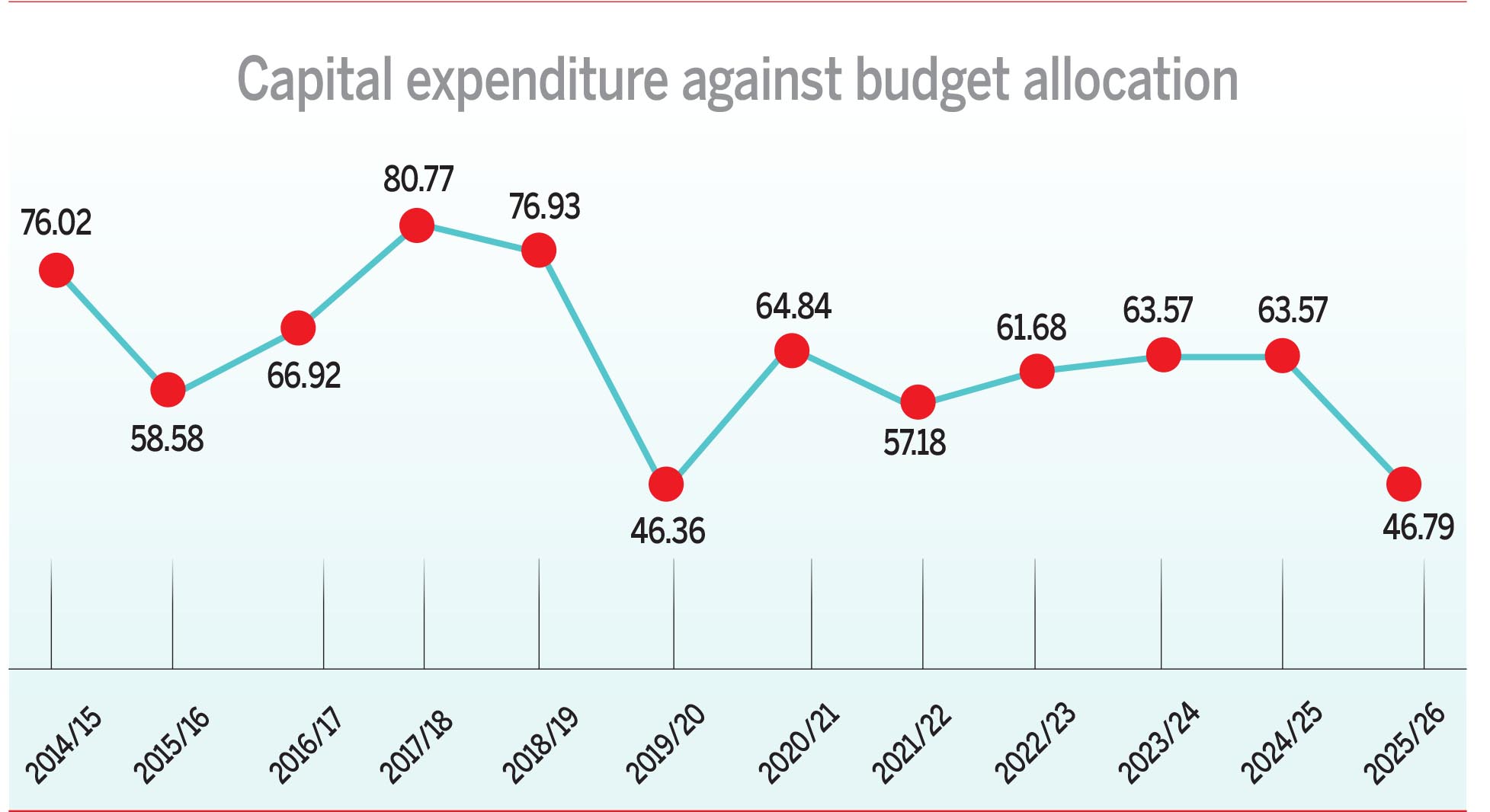
Nepal has managed to spend only 46.79 percent of its allocated annual budget for development projects. This significant shortfall highlights challenges in project implementation across the country. Authorities have attributed these delays to several key factors, including persistent political instability, which often disrupts long-term planning and execution. The recent electoral processes also played a role, diverting resources and attention away from development initiatives. Furthermore, disruptions in supply chains have hampered the timely procurement of necessary materials and equipment for various projects. This underutilization of development funds raises concerns about the efficiency of public spending and the government's capacity to drive economic growth through infrastructure and other development programs. The gap between allocated funds and actual spending suggests a need for improved project management, policy consistency, and robust supply chain strategies to ensure that development budgets are effectively utilized in the future.
The low rate of development spending in Nepal, reaching less than half of the allocated budget, points to systemic challenges in public financial management and project execution. Factors like political instability and elections, while external, reveal a vulnerability in Nepal's governance framework, where short-term political cycles may impede long-term development goals. Supply chain disruptions further underscore a need for more resilient infrastructure and diversified sourcing strategies. Looking ahead, this pattern suggests that Nepal's ability to leverage its development budget for sustained economic growth may be constrained unless there are significant reforms in bureaucratic efficiency, policy continuity, and strategic planning. Addressing these underlying issues will be crucial for unlocking the nation's development potential in the coming decade.
AI-generated to prompt reflection — not editorial opinion, not advice, not a statement of fact. How this works.