Nestlé Targets Tea Drinkers in China and India Amidst Record Coffee Demand
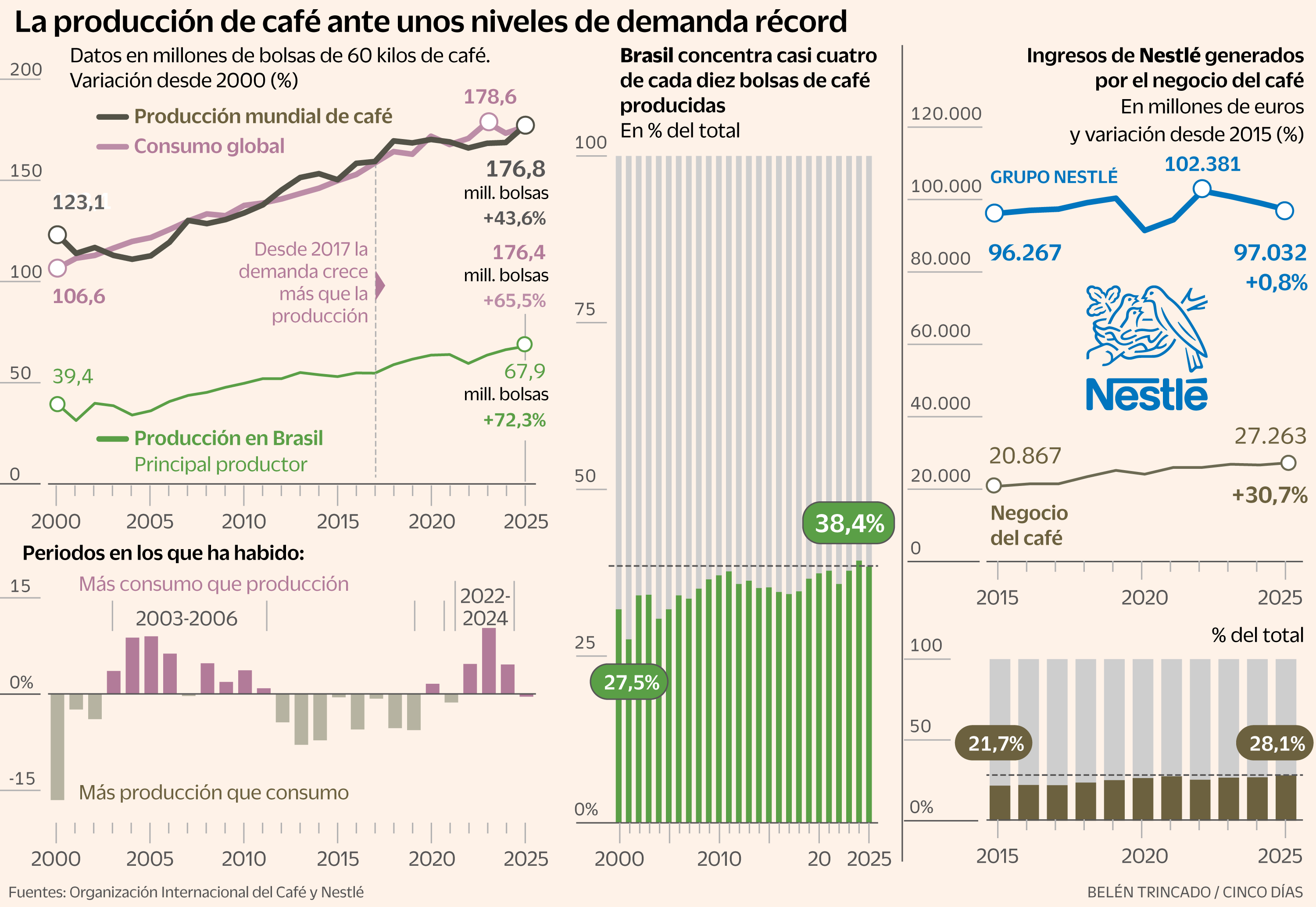
Swiss multinational Nestlé is strategically aiming to capture tea drinkers in China and India as global coffee consumption experiences record growth. The company is exploring innovative cultivation methods to meet this escalating demand. Nestlé's projections indicate a significant 50% surge in worldwide coffee consumption by the year 2040. This expansion into new consumer bases within major Asian markets reflects a proactive approach to securing future market share. The company's focus on agricultural solutions suggests a long-term commitment to sustainable sourcing and production. By appealing to the vast populations of China and India, Nestlé seeks to diversify its customer base beyond traditional coffee-drinking regions. This move is particularly noteworthy given the established tea cultures in both nations. The company's success will likely depend on its ability to adapt coffee products and marketing to local preferences. Ultimately, Nestlé's ambition highlights the immense growth potential seen in emerging markets for staple commodities.
Nestlé's strategic pivot towards attracting tea consumers in China and India, while acknowledging record coffee demand, illustrates a sophisticated understanding of global market dynamics and demographic shifts. The company's focus on cultivation formulas suggests a proactive response to potential supply chain constraints and the increasing importance of sustainable agricultural practices in the face of projected 50% demand growth by 2040. This initiative reflects a broader trend of multinational corporations seeking to penetrate diverse consumer segments and leverage established cultural preferences, such as tea consumption in these regions, as entry points. The challenge will lie in balancing global brand consistency with localized product adaptation and marketing, navigating complex regulatory environments, and ensuring ethical sourcing as demand escalates. This approach anticipates the evolving consumer landscape of the next decade, where market penetration will increasingly rely on cultural integration and resource management.
AI-generated to prompt reflection — not editorial opinion, not advice, not a statement of fact. How this works.