Netanyahu Meets Trump at White House Amid Iran War and Strained Relations
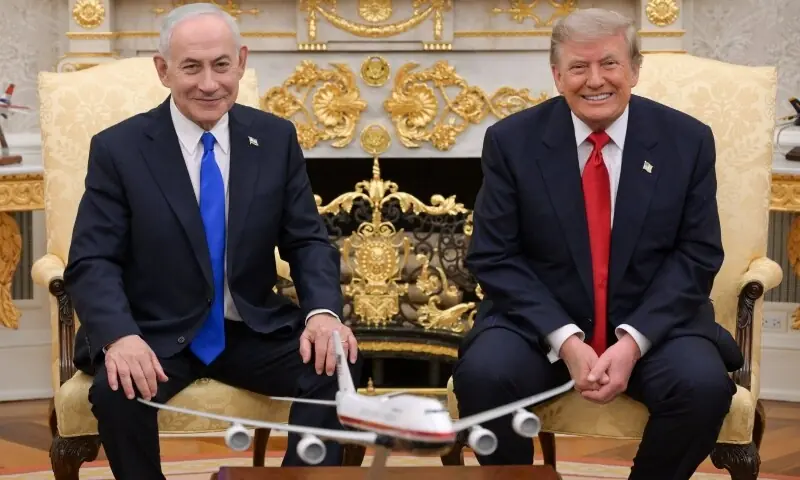
Israeli Prime Minister Benjamin Netanyahu met with US President Donald Trump at the White House on Tuesday, July 28, 2026, for their first in-person discussions since the onset of the Iran war. The meeting aimed to address public disagreements and align strategies regarding the ongoing conflict, which began with joint US and Israeli strikes on Iran in late February. While there has been a recent pause in fighting to allow for negotiations, Israel has not participated in the latest hostilities that erupted earlier this month following the collapse of an April ceasefire. The "positive and productive" talks lasted approximately an hour and a half, marking the eighth meeting between the leaders since Trump's return to office in early 2025. Both leaders face significant electoral tests later in the year, with national elections in Israel and midterm polls in the United States. Prior to the meeting, Netanyahu stated his intention to discuss Iran and expanding peace initiatives, while also attending a memorial for the late Senator Lindsey Graham. Relations had previously reached a low point in April, with Trump expressing strong criticism of Netanyahu, though Netanyahu downplayed these as "tactical disagreements." The leaders were also expected to cover the implementation of a US-sponsored framework deal with Lebanon and the stalled reconstruction efforts in Gaza, where the humanitarian situation remains dire and Israel continues to target militants. Analysts suggest the visit's primary goal is to project a united front to deter Iran and other regional actors, emphasizing shared objectives over tactical differences. Trump's focus is anticipated to be on Iran and expanding the Abraham Accords, with Gaza being a lower priority.
This high-level meeting between Prime Minister Netanyahu and President Trump occurs within a complex geopolitical landscape, characterized by the ongoing Iran war and significant electoral pressures for both leaders. The reported public disagreements and private criticisms highlight the inherent tension between allied nations' national interests and the dynamics of personal leadership. The strategic objective of projecting a unified front against Iran, as suggested by analysts, serves to manage international perceptions and influence regional deterrence. However, the underlying divergence on tactical approaches to conflict resolution, particularly concerning Gaza and the Abraham Accords, suggests that differing priorities and operational timelines may persist. Future diplomatic efforts will likely navigate these structural contradictions, balancing immediate security concerns with broader regional stability and the long-term implications of sustained conflict in Gaza.
AI-generated to prompt reflection — not editorial opinion, not advice, not a statement of fact. How this works.