Netherlands' Oldest Ferry Service Celebrates 140 Years
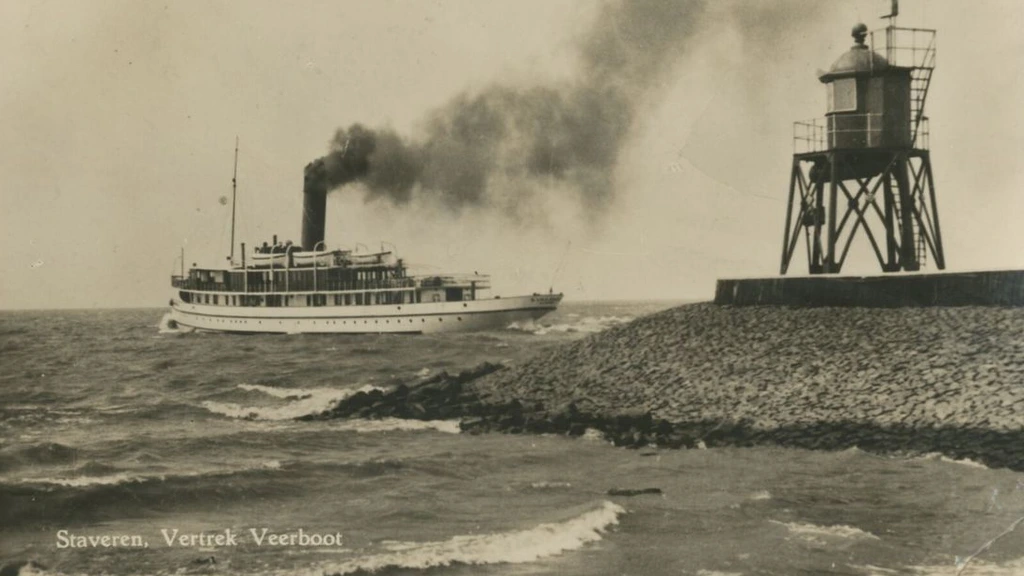
The oldest continuously operating ferry service in the Netherlands, connecting Stavoren and Enkhuizen, is celebrating its 140th anniversary on July 15th. Established on July 15, 1886, the service initially aimed to provide the "shortest and cheapest connection between Holland and Friesland." The concept originated from railway companies, specifically the Committee for the North Holland-Friesland Railway, which sought a rapid rail-boat link between Leeuwarden and Amsterdam as an alternative to horse-drawn carriages. Upon its launch in 1886, the ferry was an immediate success, facilitating seamless transfers for train passengers between Stavoren and Enkhuizen, connecting them to onward train journeys to Amsterdam. The Zuiderzee crossing took one hour, contributing to a total travel time of 3 hours and 44 minutes between Leeuwarden and Amsterdam. Initially, three departures daily were offered, quickly increasing to four, and at its peak, the service transported 340,000 people annually. The State Railways operated two steamships, the Holland and the Friesland, though the latter sank in 1888 after a collision with the Holland in dense fog, with all passengers safely rescued. A rail ferry was also added to the route from 1899 to 1936 to transport goods wagons. Since 1972, a private operator has managed the route with a diesel ship, now taking 80 minutes. While no longer a fast alternative to the train, the ferry remains a popular tourist attraction, particularly for cyclists.
This 140-year-old ferry service highlights the historical evolution of transportation infrastructure, demonstrating how early innovations sought to overcome geographical barriers for passenger and freight movement. The initial success of the rail-boat connection underscores the critical role of integrated transport systems in reducing travel times and facilitating economic activity. While technological advancements, such as faster rail networks, have diminished the ferry's original utility as a primary transit option, its persistence as a tourist attraction reflects a broader societal trend valuing historical experiences and leisure travel. The service's transition from a vital public utility to a niche recreational offering illustrates the dynamic interplay between technological progress, changing consumer preferences, and the enduring appeal of heritage transportation.
AI-generated to prompt reflection — not editorial opinion, not advice, not a statement of fact. How this works.