Netherlands to Introduce Smaller Ballots with Party Logos in 2029
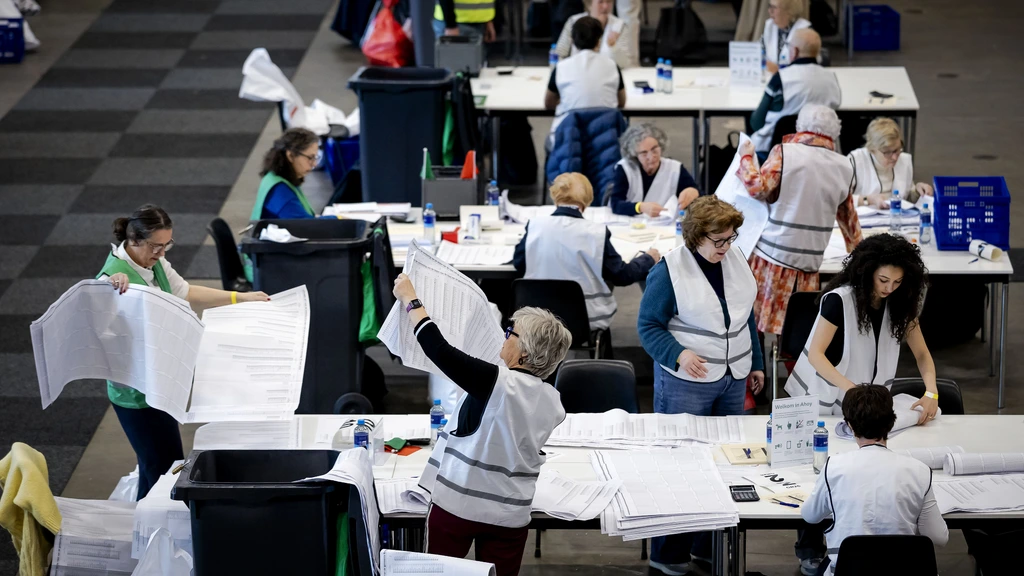
The Dutch government is set to replace the large, foldable ballot paper with a smaller version featuring party logos, starting with the 2029 European Parliament elections. This change, announced by Minister Heerma of the Interior and Kingdom Relations, aims to simplify the voting process, which previously involved hundreds of candidates on extensive sheets. The new ballot will require voters to fill in two bubbles instead of one: the first for the political party and the second for the candidate. This adjustment is expected to make it easier for voters to identify and select their preferred party.
Despite positive feedback from previous trials, the most recent test in March across eleven municipalities during local elections showed a higher percentage of invalid votes (0.47%) compared to areas using the larger ballot (0.27%). Minister Heerma acknowledged this increase but expressed confidence that voters will adapt, noting that the invalid vote rate remains low by international standards. The new system will also allow for faster vote counting, and importantly, votes with only one filled bubble will now be considered valid, defaulting to the party's lead candidate. This addresses a previous issue where such votes were invalidated.
The current large ballot will be used one last time for the Provincial Council elections in March. The transition to the new system by 2029 is contingent on parliamentary approval of the proposed legislation and necessary amendments to the electoral law. In related news, Minister Heerma also announced an investigation into the proxy voting system, following a recommendation from the Electoral Council and an incident of alleged election fraud in Gorinchem during the recent local elections, which led to a rerun of the elections and several arrests.
The Dutch government's decision to transition to smaller ballots with party logos reflects an ongoing effort to modernize electoral processes and enhance voter accessibility. While the introduction of logos and a simplified marking system aims to reduce confusion, the observed increase in invalid votes during trials warrants careful consideration. This suggests a potential trade-off between ease of use and the precision required for valid ballot casting. The system's reliance on voter adaptation highlights the critical role of public education and clear communication in electoral reforms. Looking ahead, the integration of technology in elections, while promising efficiency, must be balanced against robust security and integrity measures to maintain public trust, especially in light of recent concerns about electoral fraud and the proposed review of proxy voting mechanisms.
AI-generated to prompt reflection — not editorial opinion, not advice, not a statement of fact. How this works.