Neuroscientist Predicts Decisions Seconds Ahead, Yet Still Believes in Free Will
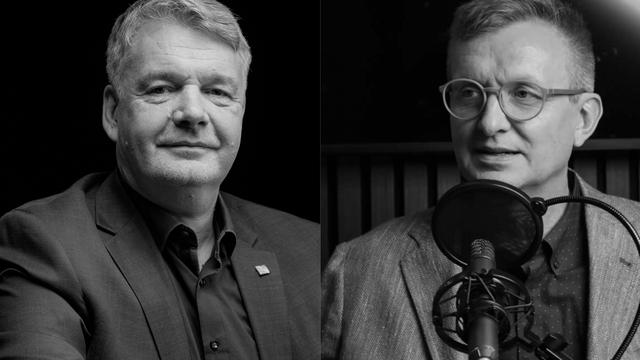
Neuroscientist John-Dylan Haynes has demonstrated the ability to predict human decisions several seconds before they are consciously made. His research, conducted at the Charité hospital in Berlin, utilizes brain imaging techniques to identify neural precursors to voluntary actions. Despite these findings, which suggest a deterministic element in decision-making, Haynes maintains his belief in the concept of free will. He argues that the predictive window of a few seconds is insufficient to negate the complex cognitive processes involved in conscious choice. Haynes' work challenges traditional notions of free will by highlighting the subconscious neural activity that precedes our awareness of making a decision. However, he posits that this does not equate to a complete absence of agency. The research raises profound questions about the nature of consciousness, determinism, and personal responsibility. Haynes' perspective suggests that free will might operate within a framework influenced by, but not entirely dictated by, preceding neural events. His ongoing work aims to further explore the intricate relationship between brain activity and subjective experience of choice.
This research probes the complex interplay between neural activity and the subjective experience of free will. By demonstrating the predictability of decisions from brain signals seconds in advance, the findings challenge intuitive notions of conscious control. However, the analysis suggests that the predictive capability, while significant, does not necessarily invalidate free will entirely. Instead, it highlights the influence of subconscious processes on conscious decision-making, prompting a re-evaluation of how agency operates within biological systems. Future considerations may involve understanding how conscious deliberation can still exert influence or modify outcomes even when initial impulses are detectable. This perspective encourages a nuanced view, moving beyond a simple dichotomy of determinism versus absolute free will, and considering the layered nature of human choice within evolving cognitive and neurological frameworks.
AI-generated to prompt reflection — not editorial opinion, not advice, not a statement of fact. How this works.