Neutron Star Merger Data Aids Cosmic Expansion Measurement
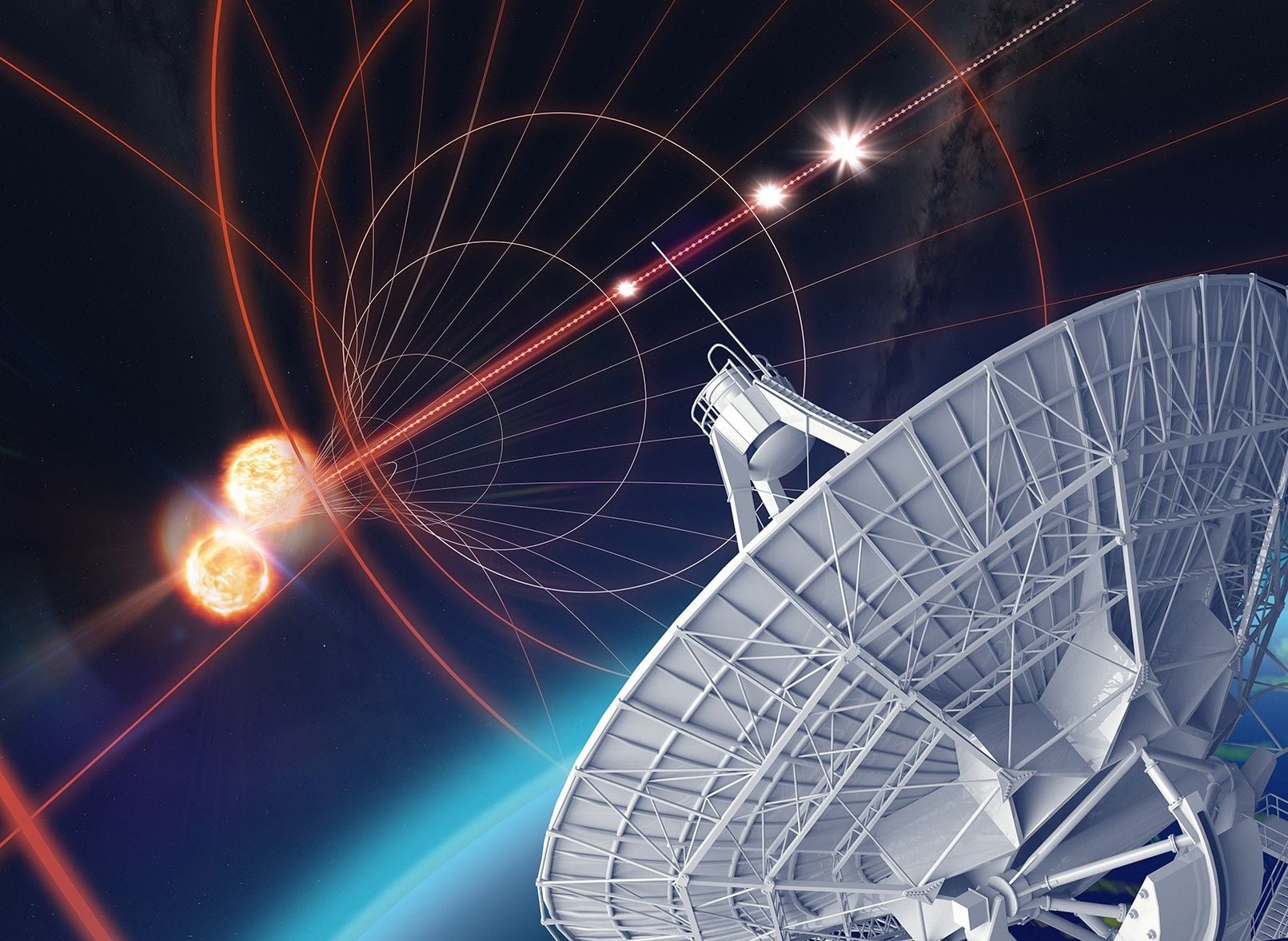
Astronomers from Swinburne University of Technology and CSIRO are employing data from a neutron star merger to refine measurements of the Universe's expansion rate. This endeavor combines observations from telescopes with gravitational wave data, aiming to resolve long-standing discrepancies in the Hubble Constant. For over ten years, cosmologists have been divided by differing values for this fundamental cosmological parameter. The Hubble Constant quantifies the rate at which the Universe is expanding and is crucial for understanding its size, age, and ultimate fate. Previous methods of measurement have yielded conflicting results, creating a significant puzzle in modern cosmology. By utilizing the unique properties of neutron star mergers, which produce both electromagnetic radiation and gravitational waves, scientists hope to achieve a more precise and independent determination of the expansion rate. This new approach offers a potential pathway to reconcile the existing tensions in cosmological measurements and provide a clearer picture of our Universe's evolution.
The integration of gravitational wave data from neutron star mergers with traditional astronomical observations represents a significant methodological advancement in cosmology. This multi-messenger approach offers an independent avenue to constrain the Hubble Constant, potentially resolving the persistent tension between early-Universe and late-Universe measurements. Such reconciliation is critical for refining cosmological models and our understanding of fundamental physics. The ability to cross-validate measurements using distinct physical phenomena enhances the robustness of scientific findings and mitigates systematic errors inherent in single-method approaches. This development underscores the power of technological innovation in pushing the boundaries of scientific inquiry and offers a promising trajectory for future cosmological research.
AI-generated to prompt reflection — not editorial opinion, not advice, not a statement of fact. How this works.