New 20-meter long-necked dinosaur species discovered in Thailand
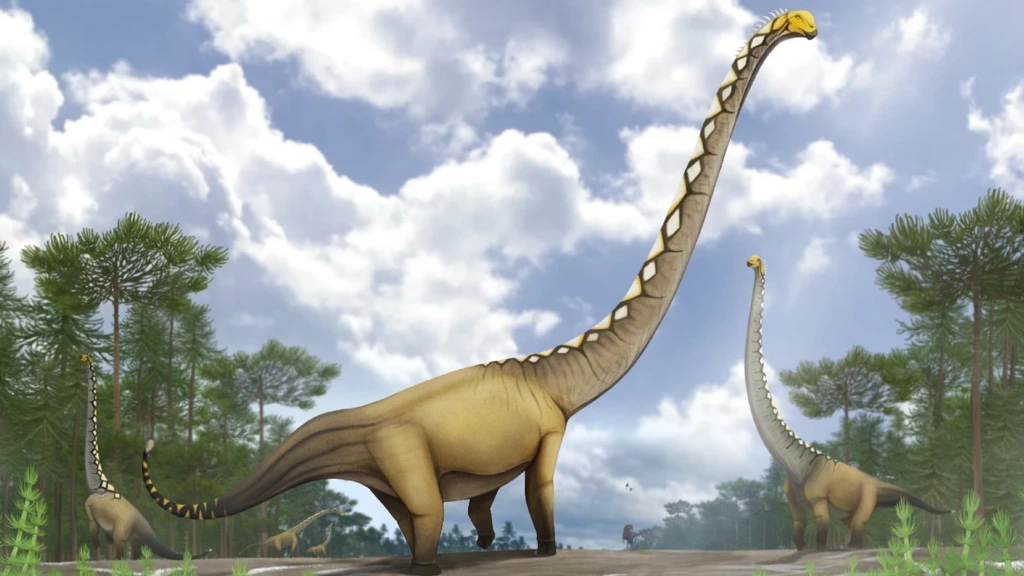
Scientists have discovered a new species of long-necked, herbivorous dinosaur in northeastern Thailand, dating back approximately 150 million years to the Late Jurassic period. Named Uragasaurus kalasinensis, the description of this new species was published in the scientific journal Scientific Reports. This discovery is significant as it marks the first officially named Mamenchisaurus from Thailand. Mamenchisauruses were known for their extremely long necks, and until now, most fossils of this group were found in China. The new species was found in Phu Noi, Kalasin province, a site that has yielded other fossils. Remarkably, researchers identified the dinosaur based on a single, well-preserved dorsal vertebra. CT scans revealed unique characteristics within the vertebra, including a distinct Y-shaped bone structure and an intricate system of air sacs. While Uragasaurus was an impressive creature, estimated at around 20 meters long, it was likely not the largest dinosaur found in Thailand. Another long-necked dinosaur species discovered in Thailand in May was estimated to be 27 meters long and weigh approximately 27 tons, significantly larger than Uragasaurus. A reliable weight estimate for Uragasaurus is not possible due to the limited fossil evidence. The scientific importance of Uragasaurus lies in its implications for the distribution of these dinosaurs, indicating their presence further south than previously known in Asia. This finding aids in understanding the evolution and spread of long-necked dinosaurs across Asia during the Jurassic-Cretaceous transition.
The discovery of Uragasaurus kalasinensis in Thailand expands our understanding of sauropod distribution during the Late Jurassic, challenging previous assumptions that Mamenchisaurus species were primarily confined to China. This finding suggests a broader geographical range for these long-necked herbivores across Asia, offering crucial insights into their evolutionary pathways and dispersal mechanisms during a pivotal period of dinosaur diversification. The reliance on a single, well-preserved vertebra highlights the potential for significant paleontological discoveries from limited fossil material, underscoring the importance of advanced imaging techniques like CT scans in identifying unique anatomical features. Future research may focus on comparative anatomy with other Mamenchisaurus specimens to further refine phylogenetic relationships and biogeographical models, potentially revealing more about the ecological niches these colossal animals occupied.
AI-generated to prompt reflection — not editorial opinion, not advice, not a statement of fact. How this works.