New Arduino Board Integrates Microcontroller onto USB-C Connector
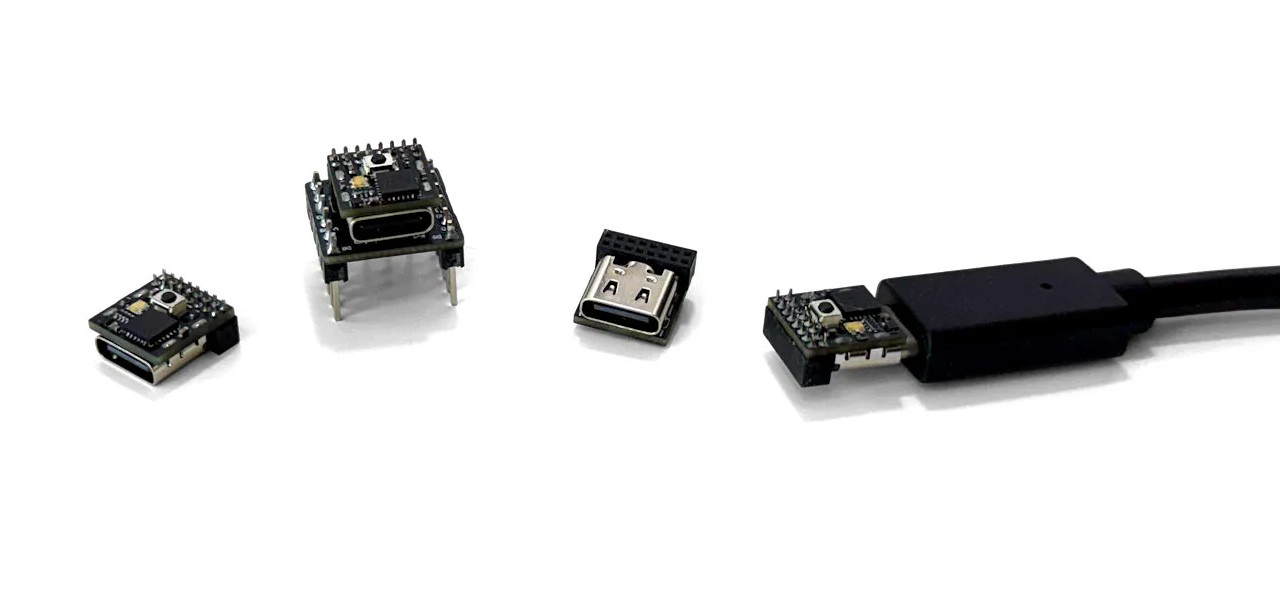
A new development in microcontroller technology sees an Arduino board integrated directly onto a USB-C connector, offering a significantly smaller footprint compared to traditional boards like the Arduino Uno. This innovative design leverages the compact size of modern microcontrollers, which provide substantial processing power and input/output capabilities in a minimal form factor. The integration onto a USB-C connector allows for direct connection and power delivery through a standard USB-C port, eliminating the need for separate power supplies or cables for basic operation. This makes it particularly suitable for applications where space is extremely limited or for projects requiring a discreet and easily deployable processing unit. The development signifies a trend towards miniaturization and increased convenience in the maker and embedded systems communities. Further details on the specific microcontroller used and its capabilities are expected.
This miniaturization trend in microcontrollers, exemplified by integrating Arduino functionality onto a USB-C connector, reflects broader technological shifts driven by the increasing demand for smaller, more powerful embedded systems. The convergence of processing power and connectivity into such a compact form factor addresses key constraints in areas like IoT, wearables, and robotics, where physical space is at a premium. Future developments may focus on further integrating wireless communication protocols and advanced sensor interfaces directly onto these small modules, potentially reducing the bill of materials and simplifying product design. The challenge will be balancing this miniaturization with sufficient processing power, memory, and thermal management for more demanding applications, while ensuring robust firmware and security features.
AI-generated to prompt reflection — not editorial opinion, not advice, not a statement of fact. How this works.