New Bodycam Footage Shows Police Fatally Shooting Unarmed, Surrendered Man in Brazil
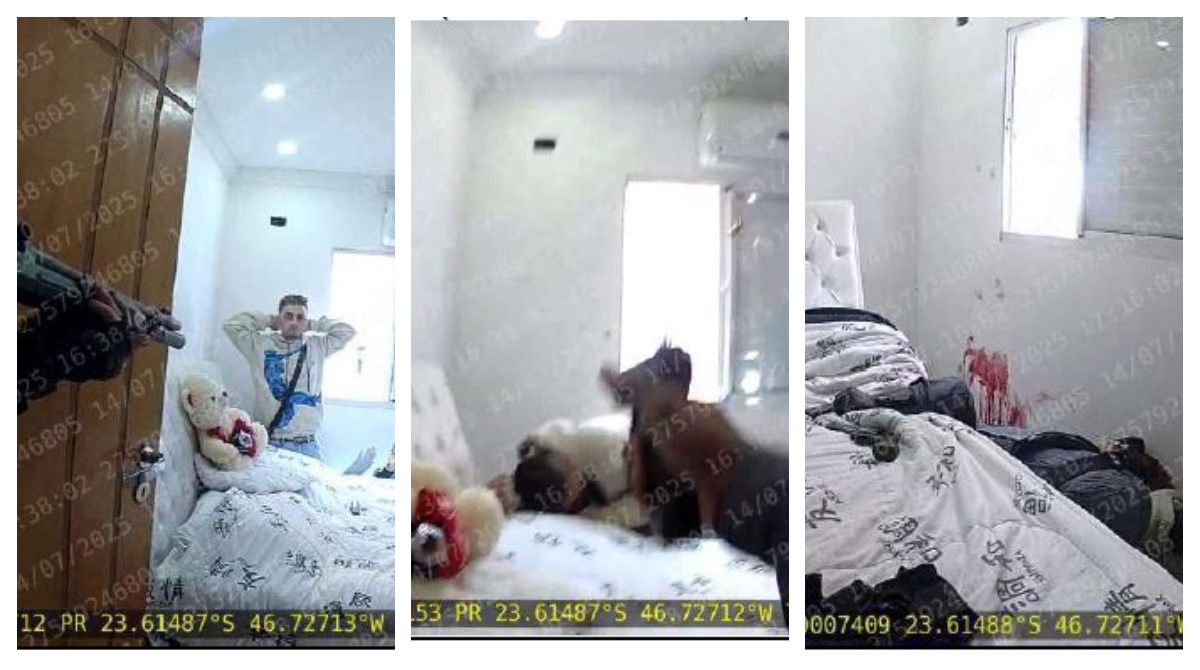
New bodycam footage has emerged, offering a different perspective on the fatal shooting of 24-year-old Igor Oliveira de Moraes Santos in Paraisópolis, São Paulo, Brazil. The trial of two military police officers accused of his execution entered its second day on Wednesday, May 29th. The videos reportedly show the precise moment officers opened fire on Santos, who was unarmed and complying with their orders. Specifically, the footage from soldier Hugo Leal de Oliveira Reis's bodycam is expected to be presented to the jury. Soldiers Renato Torquatto da Cruz and Robson Noguchi de Lima are accused of firing the fatal shots, while Reis and soldier Victor Henrique de Jesus face charges as collaborators.
The approximately 20-second sequence depicts Santos with his hands over his head, then lying on the ground as ordered. As he began to rise with one hand raised, Torquatto da Cruz fired twice, followed by Noguchi de Lima. The recordings show all four suspects in the room surrendering upon the officers' entry. Despite the suspects being unarmed, as confirmed by the bodycam footage, the officers are heard discussing whether the victim was armed. The defense attorneys for the accused officers claim the bodycam footage does not represent the full reality of the situation and intend to argue for the legality of the police action.
This case highlights critical issues surrounding police accountability and the use of force, particularly in densely populated urban areas. The availability of bodycam footage, while intended to provide objective evidence, can become a focal point of legal interpretation, with defense teams potentially arguing for contextual limitations of the recordings. The legal proceedings will scrutinize whether the officers' actions constituted a lawful response to perceived threats or an unlawful execution of a surrendered individual. The outcome could influence future police training protocols, the implementation and interpretation of bodycam evidence, and the broader public discourse on policing practices and community relations in Brazil.
AI-generated to prompt reflection — not editorial opinion, not advice, not a statement of fact. How this works.