New 'cloud fish' species discovered in Brazil's Caatinga, prompting conservation efforts
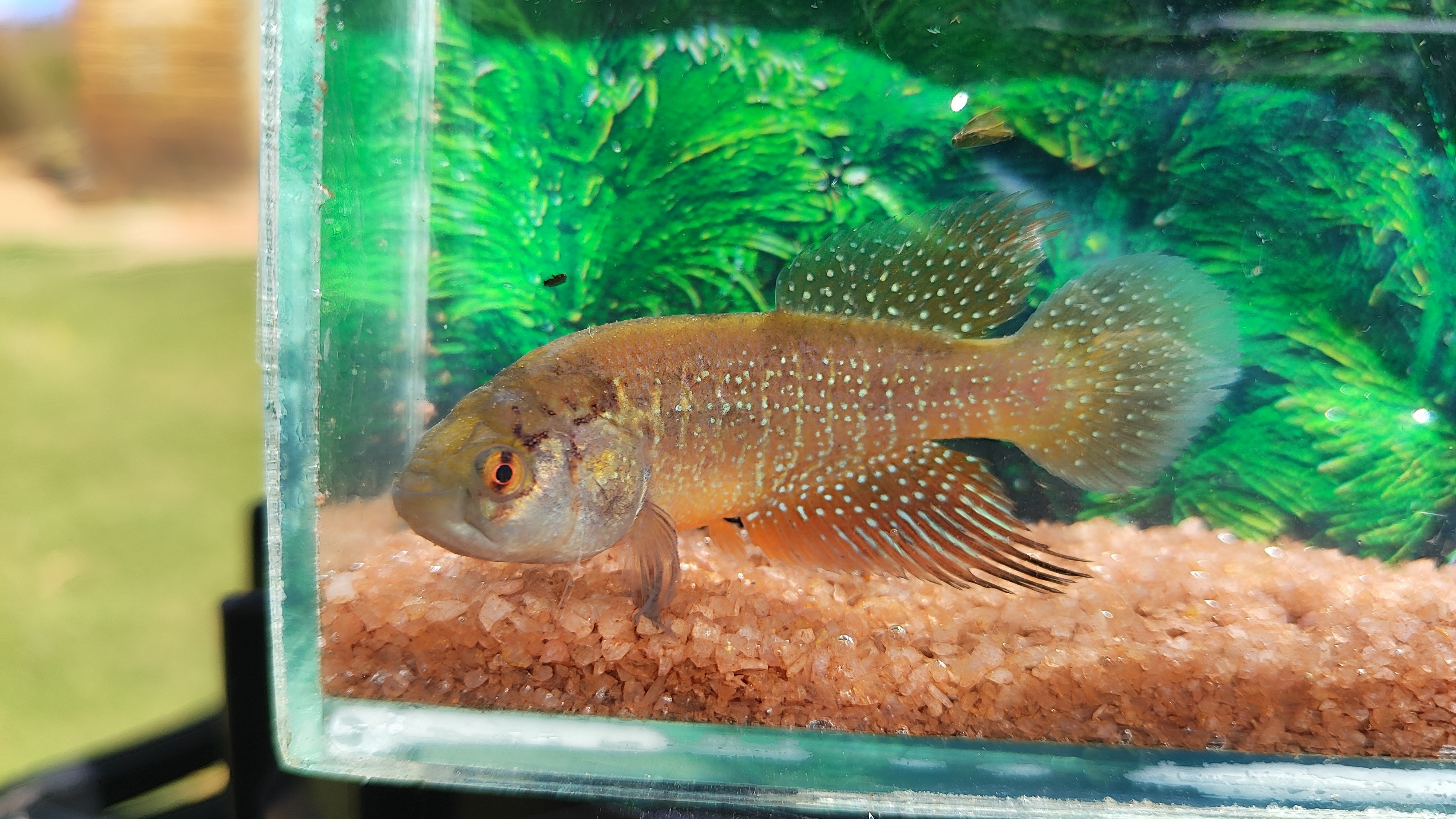
A new species of 'cloud fish' has been discovered in the Caatinga region of Brazil, identified as Cynolebias penaforte and named in honor of the municipality of Penaforte, Ceará. The discovery began with a photograph shared by a local resident, Kayque, via the 'Peixes da Caatinga' social media profile. This image prompted researchers, led by Telton P. A. Ramos, to investigate a small, temporary pond in Penaforte. Initially skeptical, Ramos was convinced by the photograph that this could be a previously undocumented species, as cloud fish are known for their highly restricted geographical distribution. The urgency to confirm the discovery was heightened by the approaching end of the rainy season, which threatened the temporary pond's existence. Facing a 600-kilometer journey and lacking expedition funds, the research team launched a crowdfunding campaign among their social media followers and members of the PAN de Rivulídeos program. With the collected funds, they traveled in Ramos's personal vehicle, nicknamed 'Siriguela,' to reach the site just as the pond was nearly dry. Kayque's father had to manually add water to sustain the remaining fish until the researchers arrived. Despite the precarious situation, they managed to collect a few specimens, noting their poor condition and damaged fins, highlighting the challenges of research in the Caatinga due to limited resources. Morphological and genetic analyses conducted at the Federal University of Paraíba and the Federal University of Rio Grande do Norte, respectively, confirmed Cynolebias penaforte as a distinct new species. The researchers emphasize that the Caatinga's biodiversity is significantly underestimated, with the Peixes da Caatinga Institute alone discovering over ten new cloud fish species in the last three years. However, the Cynolebias penaforte is already considered critically endangered, as it has only been found in one temporary pond that has already been partially filled in. The researchers hope the species' name will foster a sense of local ownership and encourage community involvement in its monitoring and conservation, while they seek resources for further expeditions to determine the species' full distribution.
The discovery of Cynolebias penaforte underscores the significant, yet often overlooked, biodiversity within Brazil's Caatinga biome, particularly in ephemeral aquatic environments. The rapid mobilization of both researchers and the public, facilitated by social media and crowdfunding, demonstrates a growing capacity for citizen-driven scientific initiatives and conservation action. However, the species' immediate classification as critically endangered, due to its single known location and ongoing habitat alteration, highlights a systemic challenge: the lag between biodiversity discovery and effective, adequately funded conservation strategies. Future efforts will require robust institutional support and proactive land-use planning to prevent the loss of species like Cynolebias penaforte before their ecological roles and potential benefits are fully understood, especially in the context of climate change impacts on arid and semi-arid regions.
AI-generated to prompt reflection — not editorial opinion, not advice, not a statement of fact. How this works.