New Dark Matter Theory Proposes Two Particle Types to Explain Cosmic Puzzles
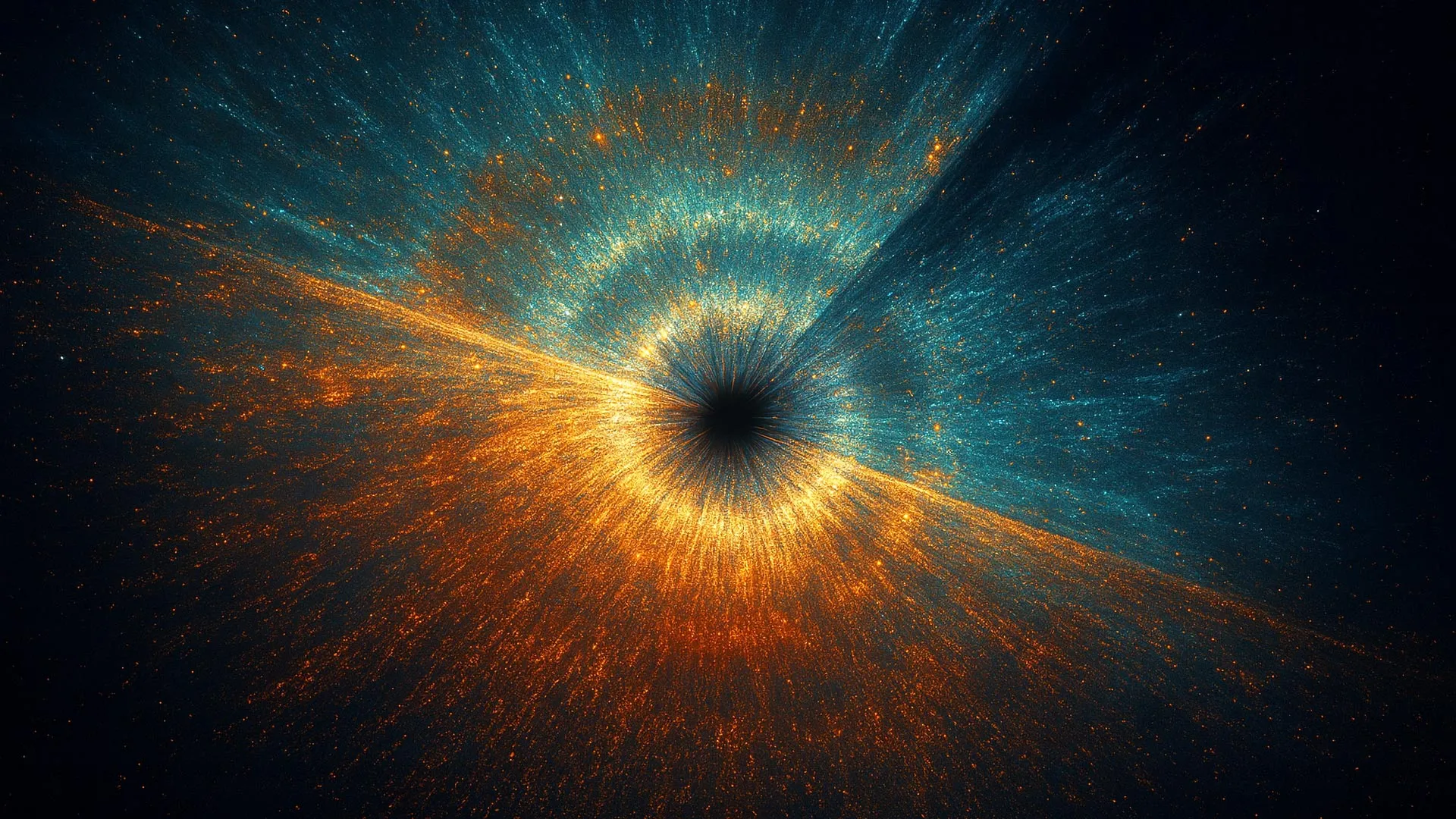
A novel theory suggests that dark matter might be more complex than previously thought, potentially comprising at least two distinct types of particles. According to this new study, these particle types would slowly separate over cosmic timescales. The proposed mechanism involves heavier dark matter particles gradually sinking towards the centers of galaxies, while their lighter counterparts drift towards the outer regions. This theoretical framework could offer explanations for several long-standing astronomical puzzles. These include the observed diffuse nature of certain dwarf galaxies and the unexpectedly dense concentrations of dark matter that cause gravitational lensing, a phenomenon where massive objects bend light. The theory aims to reconcile these diverse observations under a single, cohesive model.
This new dark matter hypothesis offers a potential unifying framework for disparate astronomical observations, moving beyond simpler single-particle models. By proposing a two-component system with differential settling, it addresses specific observational anomalies like galaxy halo density profiles and gravitational lensing patterns. The theory's strength lies in its parsimony, seeking to explain multiple phenomena with a single, albeit more complex, underlying structure. Future research will focus on deriving testable predictions from this model, such as specific signatures in cosmic microwave background radiation or the distribution of dark matter in different cosmic environments, to empirically validate or refute its claims within the next decade.
AI-generated to prompt reflection — not editorial opinion, not advice, not a statement of fact. How this works.