New Dinosaur Species Unearthed in Igea, La Rioja, Spain
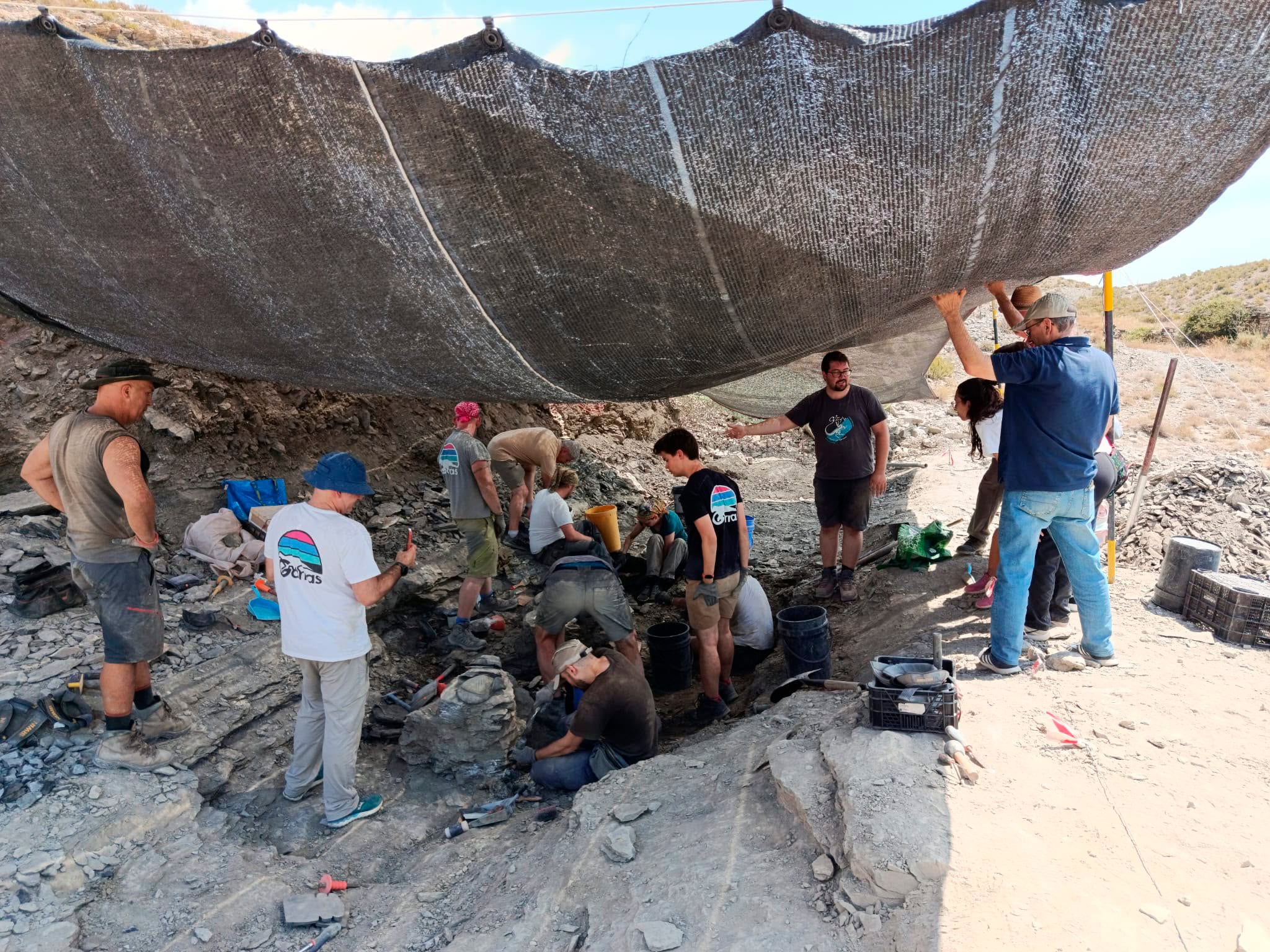
Paleontologists have discovered remains in Igea, a town in the La Rioja region of Spain, that suggest the presence of a new dinosaur species. The fossils date back approximately 120 million years, placing them in the Early Cretaceous period. These findings bolster the theory that a large herbivorous dinosaur inhabited this area millions of years ago. The discovery site in Igea has previously yielded significant paleontological finds, contributing to our understanding of prehistoric life in the Iberian Peninsula. Further research on the newly found remains is expected to provide more detailed insights into the characteristics of this previously unknown species. The ongoing exploration in La Rioja continues to highlight the region's importance as a rich source of dinosaur fossils. Scientists are optimistic that this discovery will add valuable data to the global paleontological record. The excavation and analysis are being conducted by a team of international researchers.
This paleontological discovery in La Rioja, Spain, offers a tangible link to the Early Cretaceous period, reinforcing the region's significance for prehistoric research. The identification of a potentially new herbivorous dinosaur species underscores the biodiversity of ancient ecosystems. Future analysis will likely focus on comparative anatomy to precisely classify the species and understand its ecological niche. Such findings contribute to a broader scientific narrative about dinosaur evolution and extinction patterns, prompting further investigation into the environmental conditions that supported these large herbivores 120 million years ago. This research also highlights the enduring value of systematic fieldwork in uncovering Earth's deep history.
AI-generated to prompt reflection — not editorial opinion, not advice, not a statement of fact. How this works.