New Ecological Restoration Reference Center Opens in Rio de Janeiro's Atlantic Forest
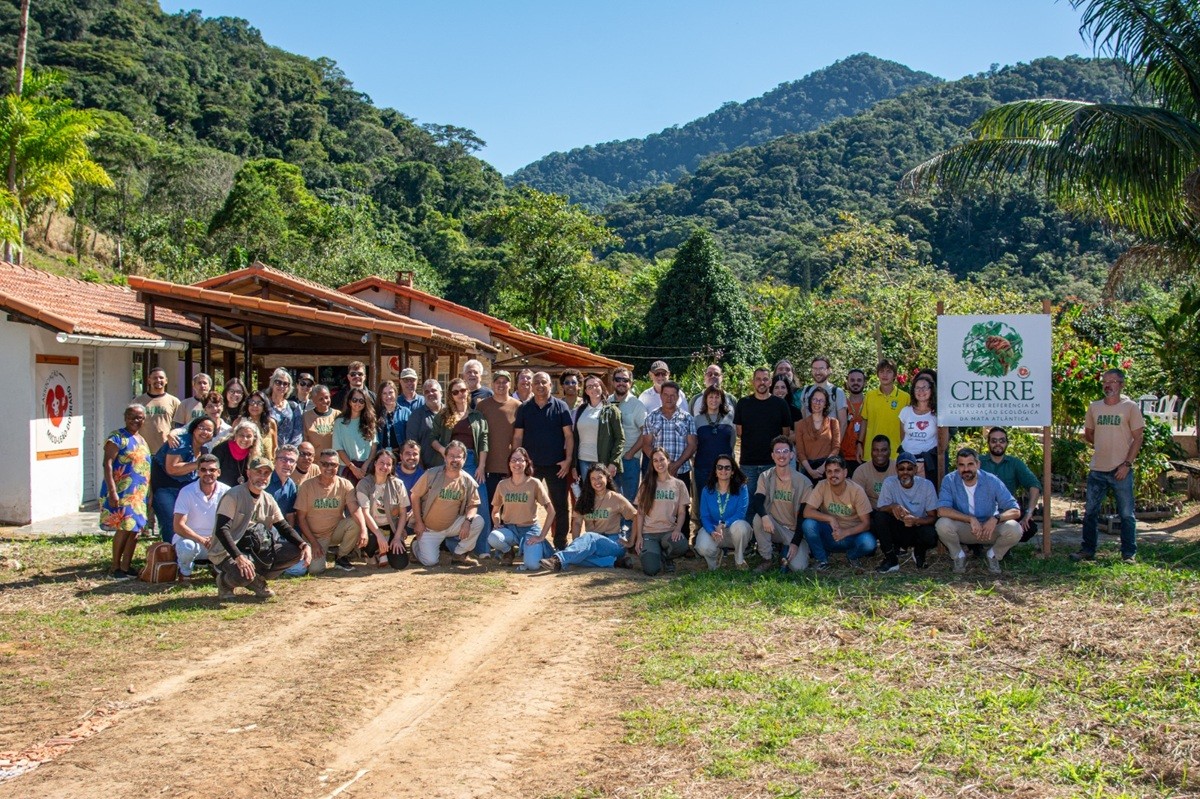
The Atlantic Forest biome in Rio de Janeiro has gained a new champion with the inauguration of the Reference Center for Ecological Restoration (CERRE) in Silva Jardim. Established by the Golden Lion Tamarin Association (AMLD) on Friday, May 17th, the center aims to advance the protection and restoration of this vital ecosystem. The CERRE is situated on Fazenda Perdida, a private natural heritage reserve known as RPPN Parque do Mico II, where 130 hectares are slated for restoration. This initiative is supported by national and international investors through projects like Floresta Viva and GEF Private Areas, and will serve as an open-air laboratory for scientific research and monitoring.
The center is the result of a broad alliance involving research institutions such as universities and the Long-Term Ecological Research Network (PELD Rede), nurseries, and conservation advocates. It will host training for researchers, students, technicians, and rural workers in restoration and biodiversity monitoring methodologies. Professor Jerônimo Sansevero of UFRRJ highlighted that CERRE consolidates decades of research and will foster long-term studies, significantly boosting ecological restoration research. Marcelo Trindade Nascimento from UENF emphasized its role in practical field research and knowledge production.
CERRE's objective is to disseminate restoration experiences and amplify efficient practices among rural landowners, demonstrating that restoration can generate income and strengthen the regional economy through sustainable and agroecological methods like Agroforestry Systems (SAFs). The inauguration included the launch of a Sustainable Livestock Demonstration Unit, showcasing techniques to increase cattle production without deforestation. Key figures present included Felipe Drummond (SEAS/RJ), Flávio Valente (Inea), Gustavo Luna (ICMBio), and Luiz Fernando Moraes (AMLD/Embrapa Agroecologia), all underscoring the importance of engaging rural landowners in sustainable land use for environmental and productive benefits. The project is funded by SEAS, BNDES, Funbio, Aegea, IIS, UNEP, SBIO, MMA, ExxonMobil, Irène M. Staehelin Foundation, and Save the Golden Lion Tamarin.
The establishment of the CERRE represents a strategic investment in ecological restoration, leveraging scientific research and practical application to address the degradation of the Atlantic Forest. By integrating academic institutions, private landowners, and diverse funding sources, the initiative aims to create a sustainable model for biome recovery that also yields economic benefits. This approach acknowledges the interconnectedness of environmental health and regional prosperity, seeking to incentivize conservation through demonstrable returns. As the world grapples with biodiversity loss and climate change, such centers are crucial for developing scalable solutions and fostering a new generation of environmental stewards. The focus on practical training and demonstration units suggests a forward-looking strategy to embed restoration practices within local economies, potentially influencing land management policies and private sector engagement in conservation efforts over the next decade.
AI-generated to prompt reflection — not editorial opinion, not advice, not a statement of fact. How this works.