New Government's Old Face: Nepali State's Persistent Use of Fines and Punishment
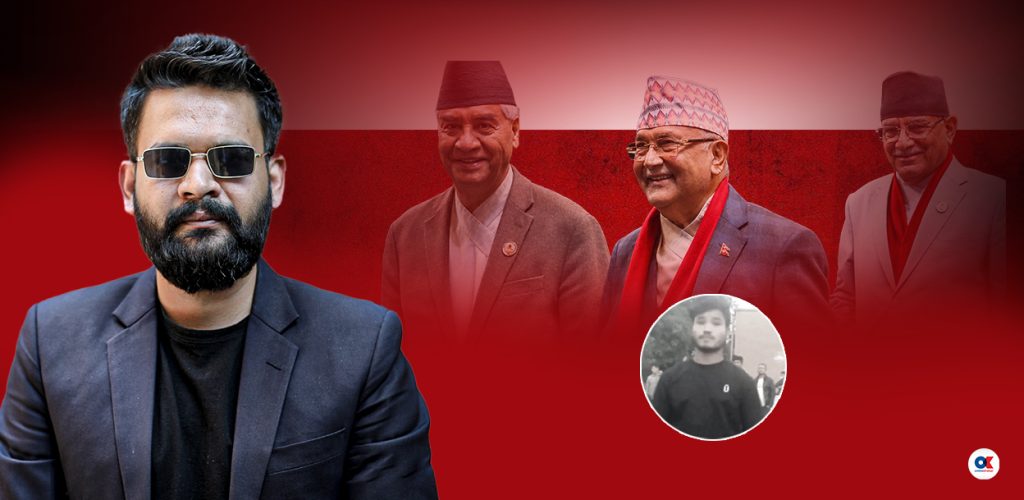
The Nepali state, from the era of Prem Prasad to the current period involving Ganesh Nepali, appears to consistently resort to fines and punishment as its primary mode of interaction. This pattern suggests a recurring approach where the state's presence is largely defined by punitive measures rather than other forms of governance or public service. The mention of specific individuals like Prem Prasad and Ganesh Nepali highlights a continuity in this state behavior across different times. This approach may reflect underlying systemic issues within the state's administrative and judicial frameworks. The reliance on fines and punishment could be indicative of a lack of alternative conflict resolution mechanisms or a deliberate choice to enforce order through deterrence and penalty. The phrase 'old face of new power' implies that despite potential changes in leadership or political structures, the fundamental methods of state operation remain unchanged. This persistent reliance on punitive measures raises questions about the effectiveness and long-term consequences of such policies on society and citizen-state relations. It suggests a need for a re-evaluation of the state's strategies for maintaining order and engaging with its populace.
The persistent application of fines and punishment by the Nepali state, as observed from Prem Prasad to Ganesh Nepali, suggests a governance model heavily reliant on coercive measures. This approach, while potentially effective for short-term order enforcement, may neglect the development of more sustainable and citizen-centric strategies. Over-reliance on punitive actions can stifle economic activity, erode public trust, and fail to address the root causes of societal issues. In the context of the evolving global landscape, particularly with advancements in AI and data analytics, future governance models are likely to emphasize proactive problem-solving, rehabilitation, and community engagement over reactive punishment. The current trajectory may create systemic friction, hindering Nepal's progress towards a more equitable and prosperous future by perpetuating a cycle of penalty rather than fostering development and social cohesion.
AI-generated to prompt reflection — not editorial opinion, not advice, not a statement of fact. How this works.