New Immersive Cinema in Santos Simulates Ocean Depths with Manta Rays
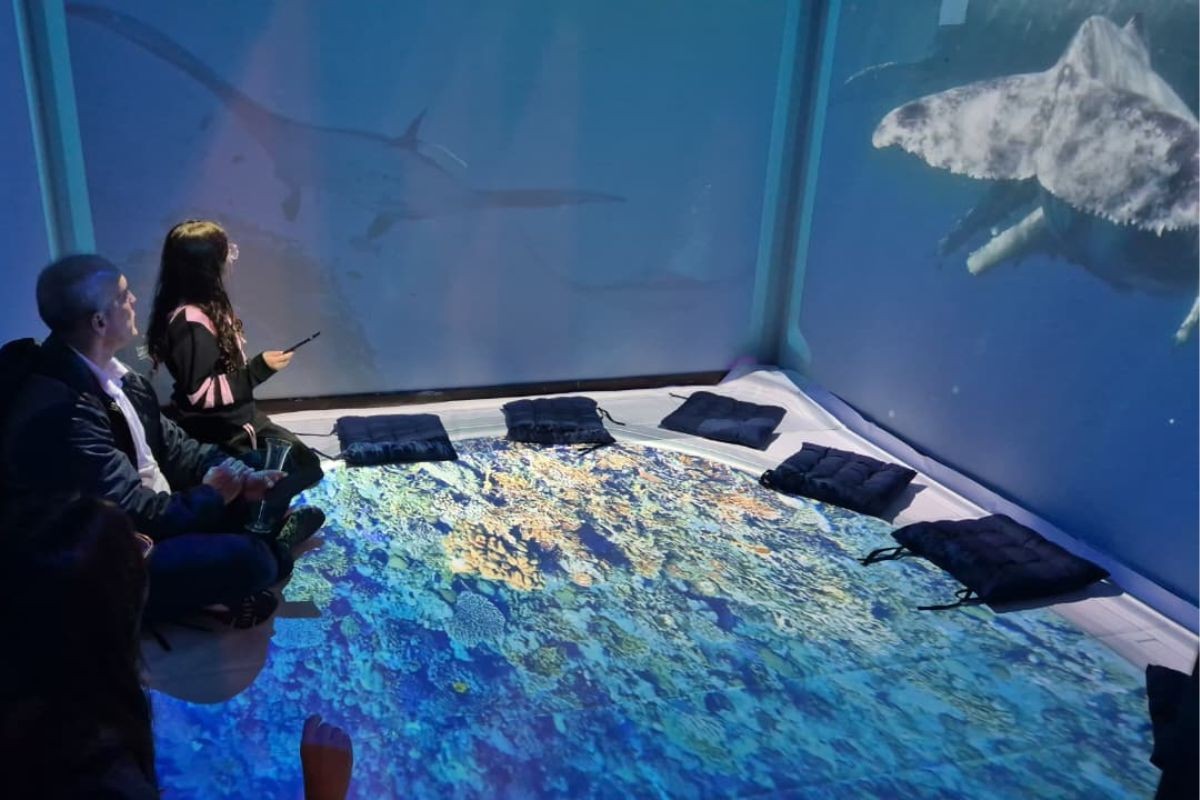
A new immersive cinema experience, designed to simulate the feeling of being at the bottom of the ocean, is a primary attraction at the Espaço Mantas do Brasil in Santos, São Paulo. This space aims to bring the public closer to marine life through interactive exhibits and ocean education activities. Located at Rua Tocantins in the Gonzaga neighborhood, it consolidates the Visitor Center and the project's administrative headquarters for the first time. Beyond the cinema, which features projections on walls and floors, the venue offers a virtual reality experience using 3D glasses, allowing visitors to interact with manta rays. The center also includes an exhibition area with genetic material samples, taxidermied specimens, and tactile pieces. Murals depicting marine life are displayed, including a life-sized manta ray artwork by plastic artist Alexandre Huber. The facility also incorporates a composter and conducts activities focused on the impact of ocean pollution. Visits are free, guided by environmental education monitors, and require advance booking, with accessibility provided for all ages and individuals with reduced mobility. The Mantas do Brasil Project, executed by the Laje Viva Institute, has been active in Santos for 15 years, conducting scientific research, manta ray conservation, and environmental education. This initiative is supported by Petrobras through its Socioenvironmental Program.
The Espaço Mantas do Brasil in Santos represents a novel approach to marine conservation education, leveraging immersive technologies like 3D virtual reality and multi-surface projections to engage the public. By simulating underwater environments and direct interaction with marine species, the initiative seeks to foster a deeper connection and understanding of ocean ecosystems. This strategy aligns with broader trends in experiential learning and digital engagement, potentially increasing public support for conservation efforts. The project's long-term commitment, spanning 15 years and supported by corporate partnerships like Petrobras, suggests a sustainable model for scientific research and public outreach. Future success will likely depend on its ability to adapt technological advancements and continuously demonstrate tangible conservation outcomes, thereby solidifying its role in both scientific advancement and environmental stewardship.
AI-generated to prompt reflection — not editorial opinion, not advice, not a statement of fact. How this works.