New Lanthanide MXenes Exhibit Both Semiconducting and Magnetic Properties
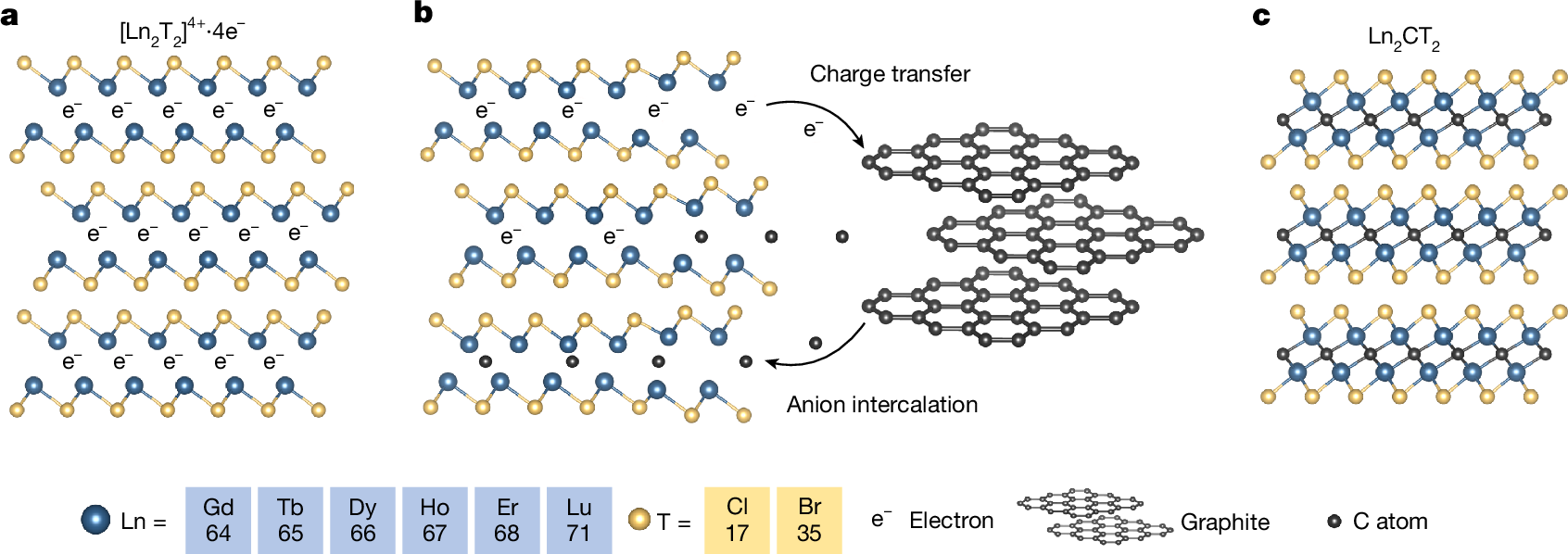
Researchers have successfully synthesized novel semiconducting and magnetic lanthanide MXenes. These materials were derived from intercalated halides, marking a significant advancement in the field of two-dimensional materials. The development opens up new possibilities for applications that require materials with both electronic and magnetic functionalities. The synthesis process involved specific intercalation techniques applied to halide precursors. This breakthrough is expected to spur further research into the potential uses of these unique MXene structures. The combination of semiconducting and magnetic properties in a single material is particularly noteworthy. It suggests potential applications in areas such as spintronics, magnetic data storage, and advanced sensor technologies. Further characterization and testing are anticipated to fully explore the capabilities of these newly developed lanthanide MXenes.
The successful synthesis of lanthanide MXenes with dual semiconducting and magnetic properties represents a notable step in materials science. This development could unlock new avenues for integrated electronic and magnetic devices, potentially impacting fields like spintronics and data storage. The challenge will be to scale production and ensure the stability and performance of these materials in real-world applications. Future research will likely focus on optimizing synthesis methods and exploring the fundamental physics governing their unique electronic and magnetic behaviors. Understanding the interplay between structure, electronic band gaps, and magnetic ordering will be crucial for harnessing their full technological potential over the next decade.
AI-generated to prompt reflection — not editorial opinion, not advice, not a statement of fact. How this works.