New Lunar Insulator Developed for Efficient Temperature Control in Spacecraft
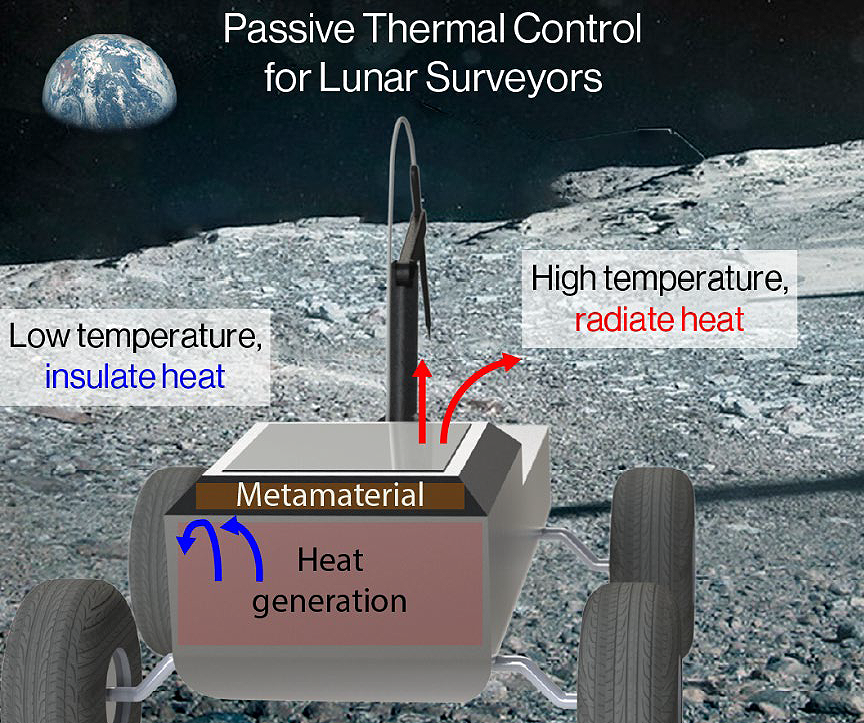
Researchers have developed a novel thermal management solution called ECLIPSE (Efficient variable Conductivity Lunar Insulator for Passive Surveyor Environmental control) to address the unique challenges of regulating temperatures in disaggregated lunar infrastructure. Future lunar operations, particularly for smaller, independent mobile systems, require improved temperature regulation devices that can operate without significant power consumption or external heating. These systems must also withstand extreme temperature fluctuations without experiencing stress that could lead to damage. The ECLIPSE technology aims to provide a passive environmental control system that can maintain stable temperatures for sensitive equipment on the Moon. This innovation is crucial for enabling long-term, sustainable lunar exploration and operations by ensuring the reliability of critical systems in the harsh space environment. The development was led by Austin Phoenix from the Virginia Polytechnic Institute & State University.
The development of passive thermal management systems like ECLIPSE reflects a growing trend in space exploration towards greater efficiency and reduced reliance on active power systems. As lunar missions increasingly focus on smaller, disaggregated assets, the incentive to minimize power draw and thermal stress becomes paramount for operational longevity and cost-effectiveness. This innovation addresses a fundamental engineering challenge, potentially enabling more robust and autonomous lunar surface operations. Looking ahead, advancements in materials science and passive control mechanisms will be critical for scaling lunar infrastructure and supporting more complex scientific endeavors, while also informing the design of systems for other celestial bodies with extreme temperature variations.
AI-generated to prompt reflection — not editorial opinion, not advice, not a statement of fact. How this works.