New Metal Film Offers 3x Copper Thermal Conductivity for AI Chip Cooling
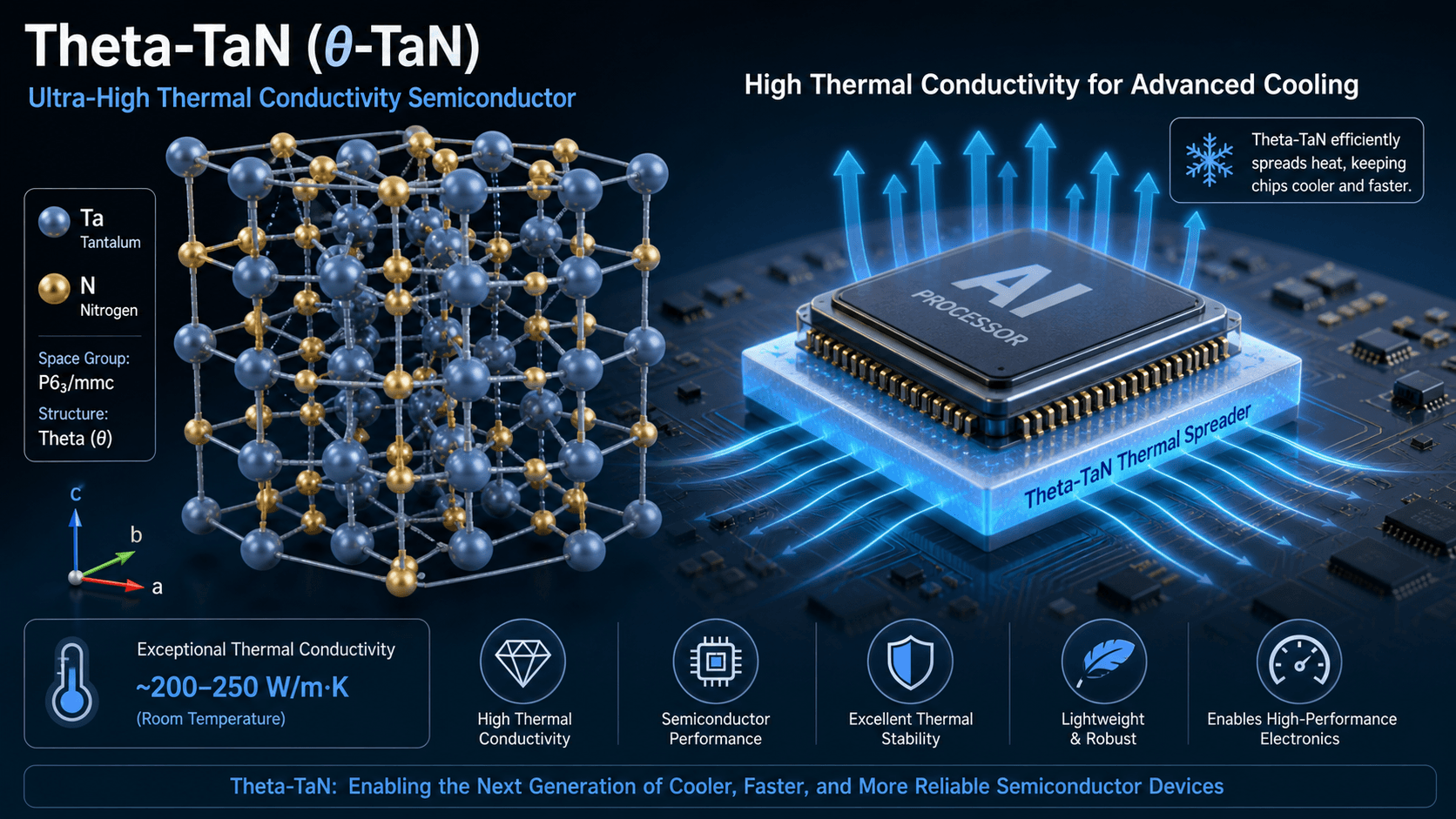
Researchers from UCLA and Tohoku University have developed a novel single-crystal material, theta-phase tantalum nitride (TaN), that exhibits exceptional thermal conductivity. This new material boasts a thermal conductivity of 1,100 W/mK, which is approximately three times that of copper, a standard material used for heat dissipation. This breakthrough approaches the heat dissipation capabilities of diamond, the most thermally conductive material known. Importantly, the theta-TaN can be produced using existing metal processing techniques, making it compatible with current AI chip packaging technologies. This advancement addresses a critical bottleneck in the performance and longevity of advanced computing systems, particularly those driven by artificial intelligence, which generate significant heat. The development could pave the way for more efficient and powerful AI hardware by enabling better management of thermal loads. The creation of this material represents a significant step forward in materials science for high-performance electronics.
The development of theta-TaN with significantly higher thermal conductivity than copper presents a compelling solution to the escalating thermal management challenges in high-performance computing. As AI workloads intensify, the heat generated by chips becomes a primary constraint on processing power and device longevity. This material's compatibility with existing manufacturing processes is a crucial factor for its potential adoption, mitigating the high costs and complexities typically associated with introducing novel materials into semiconductor fabrication. The long-standing reliance on copper for thermal dissipation may now face a paradigm shift, potentially unlocking new avenues for chip design and performance optimization. Future research will likely focus on scaling production, long-term material stability under operational stress, and integration strategies to fully capitalize on this thermal conductivity enhancement.
AI-generated to prompt reflection — not editorial opinion, not advice, not a statement of fact. How this works.