New Monsoon Spell Begins in Pakistan Amidst Previous Spell's Devastation
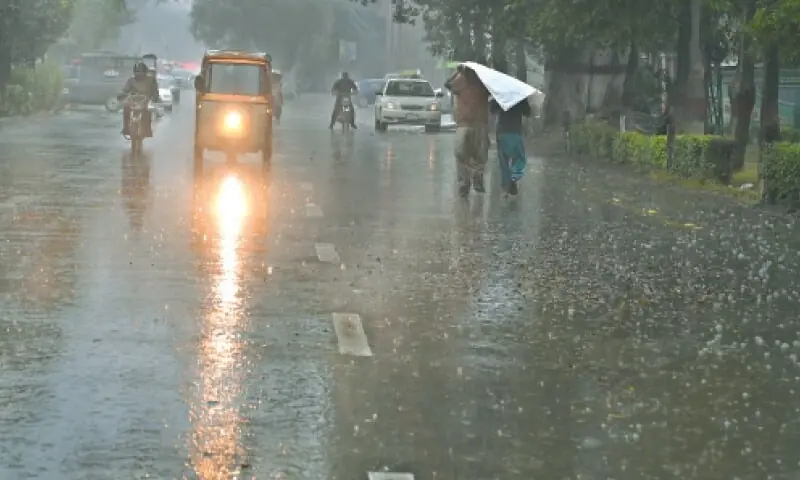
A new monsoon spell has commenced in parts of Punjab and Islamabad, Pakistan, following a previous spell that resulted in widespread flooding and over 100 fatalities. On Wednesday morning, showers marked the beginning of this fresh spell, with Lahore reporting one injury due to a roof collapse. The Water and Sanitation Agency (Wasa) recorded significant rainfall in Lahore, with Mughalpura receiving 44.4mm by 11 am. Other areas in Lahore also experienced varying amounts of rain. The Pakistan Meteorological Department (PMD) confirmed showers in Sialkot, Jhelum, Rawalpindi, Islamabad, Narowal, Mangla, and Murree. Sialkot city recorded 54mm of rain, with Wasa reporting inundation in several areas. This new spell arrives as the country recovers from the previous one, which caused floods in Punjab and other regions. Flooded nullahs were breached, submerging agricultural land along the GT Road near Lahore and Gujranwala, as well as Kasur. Floodwaters also inundated villages near Muridke, leaving neighbourhoods submerged. Rescue volunteers are actively evacuating residents and distributing aid. A government meeting confirmed that the previous monsoon season led to 110 deaths, 360 injuries, damage to 796 houses, and the loss of 376 livestock.
The onset of a new monsoon spell immediately after a devastating one highlights Pakistan's vulnerability to extreme weather events, exacerbated by climate change. The recurring pattern of heavy rainfall, flooding, and infrastructure damage points to systemic challenges in water management, urban planning, and disaster preparedness. While immediate relief efforts are crucial, a long-term strategy is needed to build resilient infrastructure, improve early warning systems, and implement sustainable land-use practices. The government's response, including post-disaster assessments and meetings, is a step towards addressing the crisis, but sustained investment in climate adaptation and mitigation will be essential to reduce future losses and protect vulnerable populations from the intensifying impacts of climate change over the next decade.
AI-generated to prompt reflection — not editorial opinion, not advice, not a statement of fact. How this works.