New Moon Rocks Reveal a More Complex Impact History Than Previously Thought
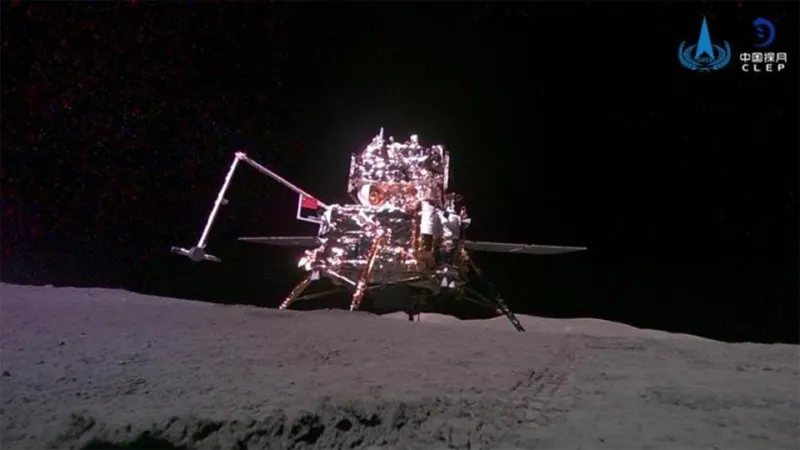
Recent analysis of lunar samples from the Moon's farside is challenging previous understandings of the Moon's impact history. Older lunar rock samples, including those brought back by the Apollo missions, suggested that a significant portion of the Moon's surface was shaped by a single, massive impact event. However, these new farside samples present a different narrative, indicating a more complex and potentially varied bombardment history.
This discovery implies that the Moon's geological evolution may not have been dominated by one singular event as previously believed. The variations in the rock samples suggest that multiple impact events, possibly of different scales and occurring at different times, contributed to the Moon's current surface features. Further research into these farside samples is expected to provide a more nuanced picture of the early solar system and the processes that shaped celestial bodies.
The differing lunar rock compositions suggest that scientific models of planetary bombardment may require revision. Instead of a singular dominant impact, a more heterogeneous history of impacts across the Moon's surface is indicated. This has implications for understanding the distribution of resources and the geological evolution of not just the Moon, but other celestial bodies as well. Future research should focus on integrating these new findings into broader models of solar system formation and impact dynamics, potentially revealing new insights into the timeline and intensity of early cosmic collisions.
AI-generated to prompt reflection — not editorial opinion, not advice, not a statement of fact. How this works.