New Narrow Bridge Causes Holiday Chaos for Motorhomes in Gelderland
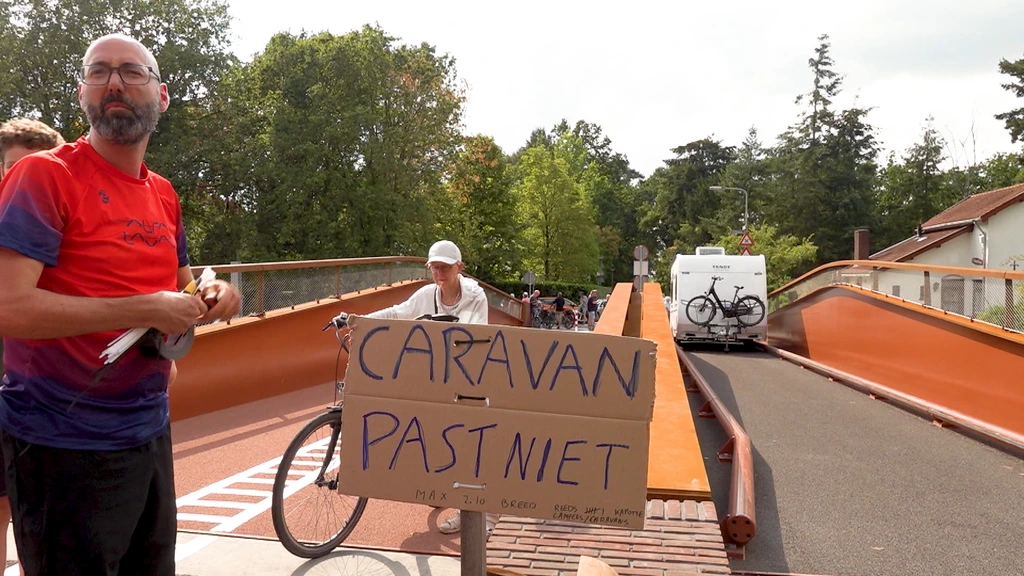
A newly constructed, narrow bridge located on the border of Limburg and Gelderland, designed to deter heavy goods vehicles, has become a significant obstacle for holidaymakers. The bridge features steel pipes on its surface to restrict the width of passing vehicles. In just one week, at least ten vehicles, primarily motorhomes and those towing caravans, have become stuck. On the day prior to the report, two separate incidents occurred, causing hours of traffic disruption. The bridge is situated on a bypass route between Molenhoek and Groesbeek, a route that residents had hoped would reduce the amount of through-traffic. Residents have expressed frustration, with one local, Joost Engel, stating that the area has been a source of 'misery' for as long as he can remember. Shortly after the bridge's completion, a camper vehicle became immobilized. The driver, a woman from Zeeland who wished to remain anonymous, described how her caravan became wedged. Her vehicle required towing and sustained damage to its wheel rims, marking a disappointing start to her vacation. Despite the presence of multiple traffic signs indicating the maximum vehicle width, including three signs warning drivers, incidents continue. Some residents have resorted to placing their own makeshift signs reading 'caravan does not fit' to further alert drivers. While these issues have arisen, locals report a positive side effect: a notable reduction in noise and speed from passing vehicles, leading to increased tranquility. Nevertheless, the owner of the damaged caravan questioned the municipality's planning, suggesting that better consideration should have been given to the implications of such a design. A spokesperson for the municipality has confirmed that urgent discussions are scheduled between the local government and ProRail, the entity responsible for the bridge's ownership and management.
The implementation of infrastructure designed to reroute or restrict specific traffic types, such as heavy goods vehicles, can inadvertently create unintended consequences for other road users, particularly during peak travel seasons. This situation highlights a potential disconnect between infrastructure design intended for traffic management and the practical realities of diverse vehicle usage, including recreational travel. The use of physical deterrents like steel pipes, while effective in blocking larger vehicles, presents a clear hazard if not adequately communicated or if the design itself is not universally accommodating. The reliance on signage alone, even multiple signs, proved insufficient, necessitating community-driven, albeit informal, supplementary warnings. This suggests a need for more robust, multi-layered communication strategies and potentially more forgiving design parameters in areas serving mixed traffic, especially those experiencing increased recreational use. Future urban planning and infrastructure projects should incorporate more comprehensive impact assessments that account for seasonal traffic variations and the full spectrum of vehicle types, ensuring that traffic calming measures do not become significant impediments or safety risks.
AI-generated to prompt reflection — not editorial opinion, not advice, not a statement of fact. How this works.