New National Strategic Command Chief Meets Army Chief in Rawalpindi
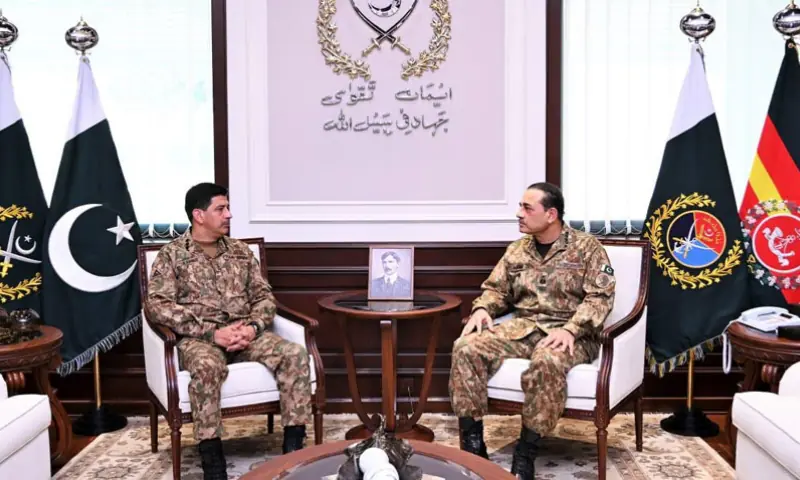
General Aamer Raza, the newly appointed Commander of the National Strategic Command (CNSC), met with Chief of Defence Forces (CDF) and Chief of the Army Staff Field Marshal Asim Munir at General Headquarters in Rawalpindi on Monday. Field Marshal Munir congratulated General Raza on assuming his new command. General Raza was promoted to four-star general and appointed CNSC on Friday, following an announcement by Prime Minister Shehbaz Sharif, who also extended his best wishes for the crucial role. Upon his arrival at GHQ, General Raza received a guard of honour and paid respects at Yadgar-i-Shuhada, offering prayers for fallen soldiers. He has previously been recognized with the Hilal-i-Imtiaz (Military) and Sitara-i-Basalat. The CNSC position was established under the 27th Constitutional Amendment to manage nuclear affairs, a role previously held by the abolished Chairman Joint Chiefs of Staff Committee. This amendment also created the CDF position, with the CNSC's appointment, reappointment, and extensions being solely based on the CDF's recommendation. Notably, the amendment stipulates that decisions regarding the CNSC cannot be challenged in any court. Field Marshal Asim Munir, also the Chief of Army Staff, was appointed as the first CDF following the amendment's passage.
The recent appointment and meeting underscore the consolidation of strategic command within Pakistan's military structure, particularly concerning nuclear oversight. The creation of the CNSC and CDF roles, along with the constitutional amendment shielding these appointments from judicial review, suggests a deliberate effort to centralize and secure nuclear command authority. This move aligns with a broader trend observed in various nations seeking to strengthen control over strategic assets amidst evolving geopolitical landscapes. The emphasis on the CDF's recommendation for CNSC appointments highlights the interconnectedness of conventional and strategic military leadership, potentially creating a robust, albeit opaque, decision-making framework. Future developments will reveal how this concentrated authority influences Pakistan's strategic posture and civil-military relations in the long term.
AI-generated to prompt reflection — not editorial opinion, not advice, not a statement of fact. How this works.