New Photophoretic Tracers Enable Remote Sensing in Near-Space Altitudes
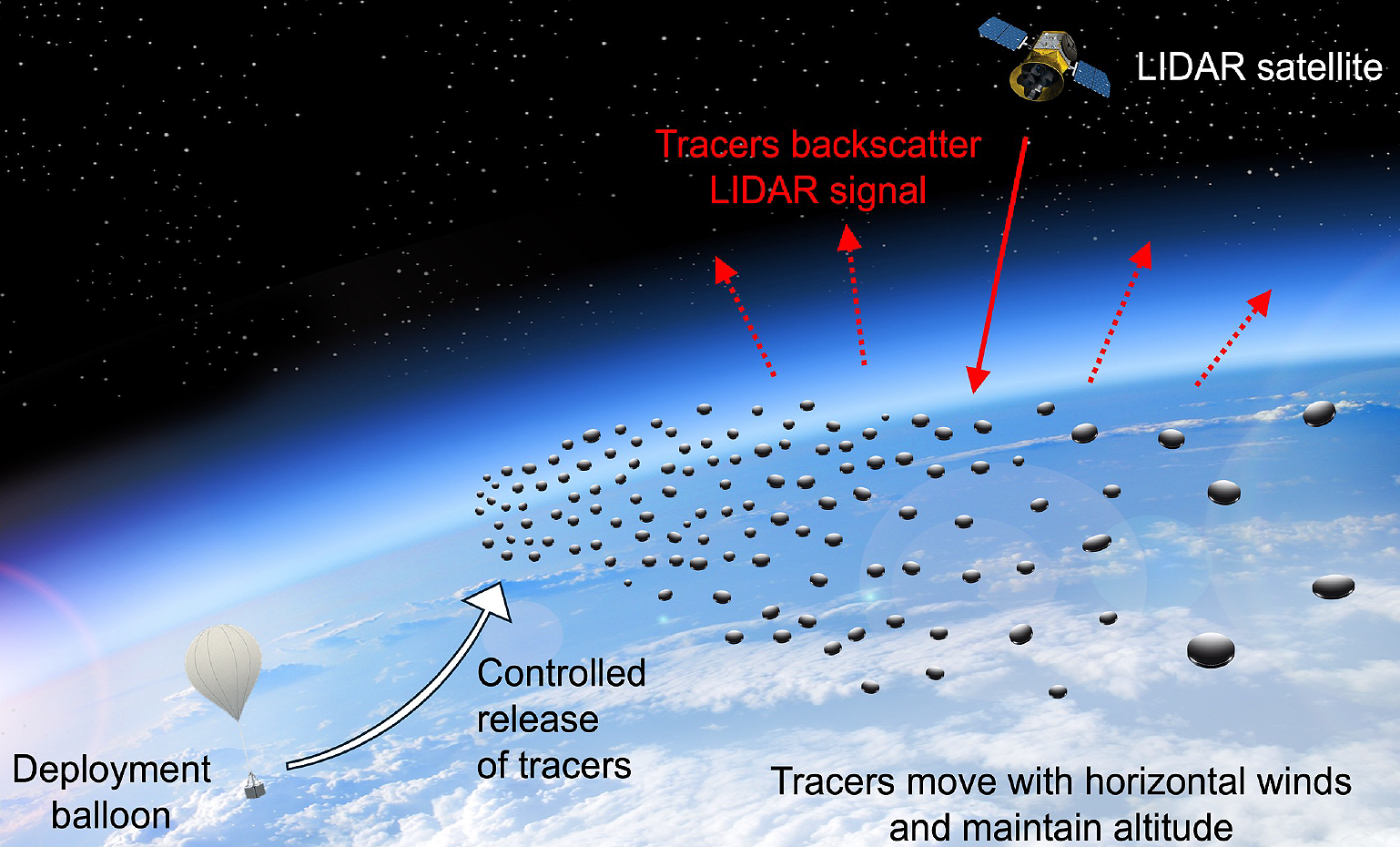
Researchers at Rarified Technologies, Inc. have developed a novel method for atmospheric sensing in the near-space region, specifically between 30 and 100 kilometers in altitude. This innovative approach utilizes photophoretically levitating tracers, which are lightweight structures designed to harness sunlight for suspension. These tracers can remain airborne for extended periods, potentially up to several months, at precisely controlled altitudes. Their presence and movement can be monitored remotely using satellite-based lidar or radar systems. Unlike naturally occurring aerosols, these engineered tracers are specifically designed to offer a strong and distinct signal for tracking purposes. This technology promises to enhance our ability to remotely observe and understand the conditions in this under-explored atmospheric layer.
This development in photophoretic tracers offers a new avenue for remote atmospheric monitoring at altitudes previously challenging to observe consistently. The system's reliance on sunlight for levitation and satellite-based tracking suggests a potentially low-energy and scalable solution. However, the long-term stability and environmental impact of these synthetic tracers, particularly over months of deployment, warrant careful consideration. Future research should focus on the ecological implications and the robustness of the tracking mechanisms under varying atmospheric conditions. The ability to precisely control tracer altitude could provide valuable data for climate modeling and space debris tracking, but the system's effectiveness will depend on its cost-efficiency and reliability compared to existing methods.
AI-generated to prompt reflection — not editorial opinion, not advice, not a statement of fact. How this works.