New Plasmon-Enhanced Generator Promises Breakthrough for Interstellar Space Missions
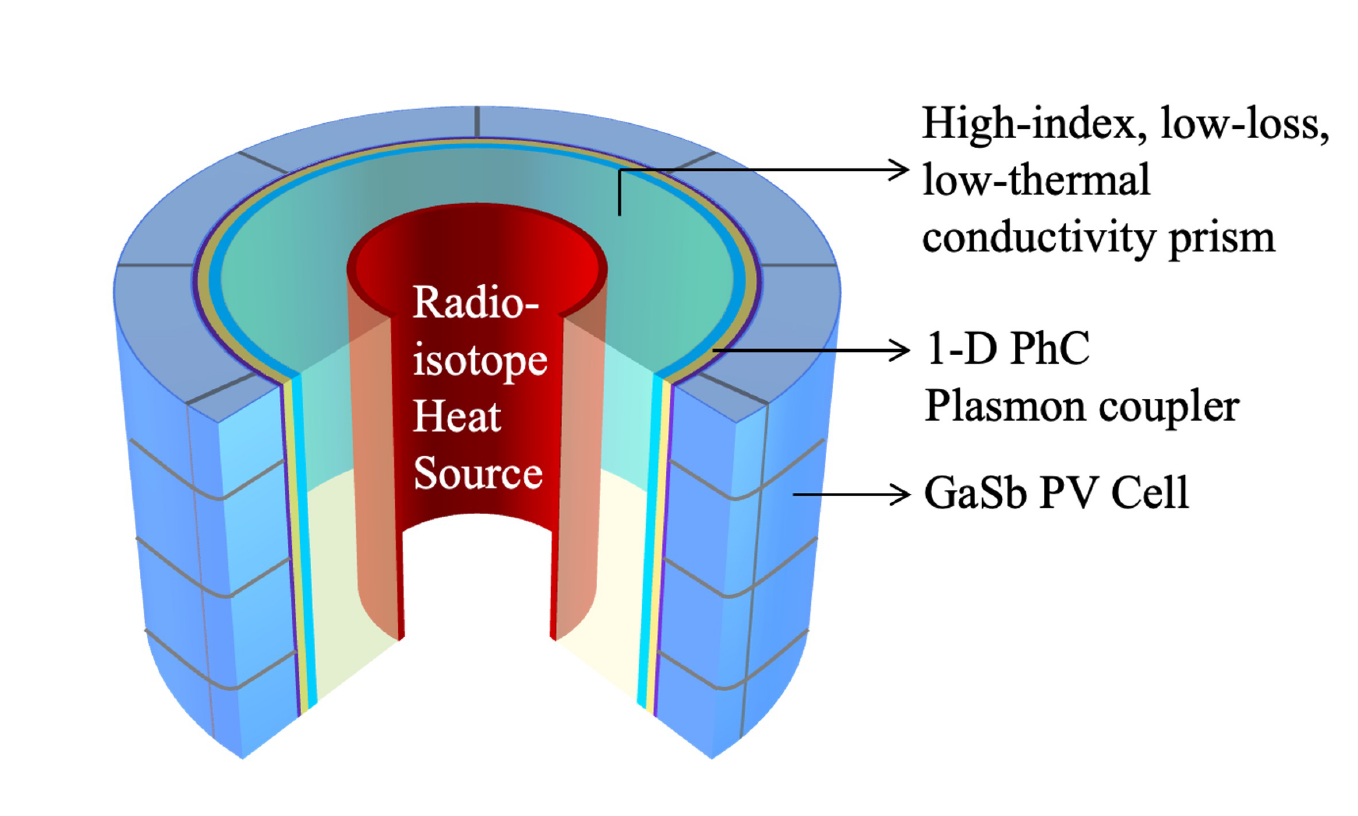
Researchers at the University of Utah have proposed a novel energy system, the plasmon-enhanced radioisotope Thermophotovoltaic (PRTPV) generator, designed to dramatically improve upon existing radioisotope thermoelectric generators (RTGs). This new technology aims to achieve a specific power output of 17 W/kg, a significant leap from current capabilities. Furthermore, the PRTPV generator is projected to exceed a thermal-to-electric conversion efficiency of 40%. These advancements are crucial for enabling long-duration interstellar missions, which require highly efficient and powerful energy sources. The development of the PRTPV generator represents a potential paradigm shift in space exploration power systems, offering enhanced performance metrics that could unlock new possibilities for deep space travel.
The proposed PRTPV generator addresses a critical bottleneck in deep space exploration: efficient and high-density power generation. By leveraging plasmonic enhancement, the system aims to overcome the inherent efficiency limitations of traditional RTGs, which have historically been a limiting factor for mission duration and payload capacity. The projected performance metrics of 17 W/kg and >40% efficiency, if realized, could significantly reduce the mass required for power systems, enabling more ambitious scientific payloads or extended mission lifetimes. This innovation aligns with the long-term trend towards electrification and higher energy demands driven by advanced AI and sensor technologies in space. Future advancements will likely focus on material stability, long-term operational reliability in harsh space environments, and cost-effective manufacturing processes to make such transformative technologies viable for widespread adoption in the coming decade.
AI-generated to prompt reflection — not editorial opinion, not advice, not a statement of fact. How this works.