New Publication Unlocks Secrets of Octavian's Victory Monument in Nicopolis
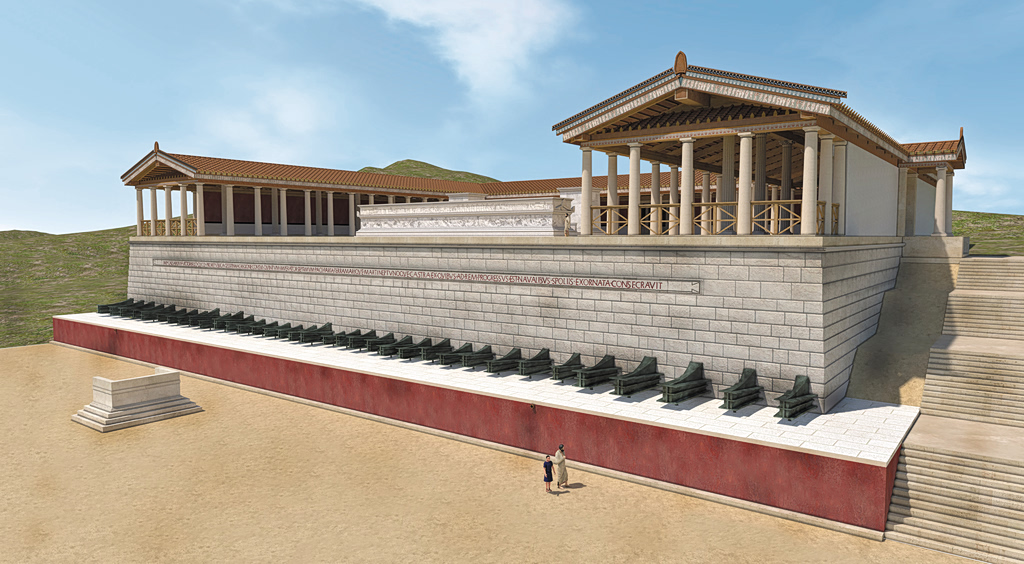
A newly released three-volume publication is shedding light on the secrets of the oldest surviving monumental depiction of a Roman emperor's triumph, located in Nicopolis, Greece. The excavation and subsequent research were led by Konstantinos Zachos, who also oversaw the editing of this extensive work. This monument is a significant historical artifact, offering unparalleled insights into Roman imperial propaganda and military achievements during the reign of Octavian, later known as Augustus. The detailed inscriptions and reliefs are expected to provide new understandings of the political and social context of the late Roman Republic and early Roman Empire. The publication aims to make these discoveries accessible to a wider audience, including scholars and the general public interested in ancient history. It represents a culmination of years of dedicated archaeological work and scholarly analysis. The monument's preservation and the ongoing study of its contents are crucial for understanding this pivotal period in Western civilization. The comprehensive nature of the three volumes suggests a thorough examination of every aspect of the monument's construction, purpose, and historical significance.
This publication offers a valuable opportunity to re-examine the historical narrative surrounding Octavian's victory and its monumental commemoration. By delving into the oldest surviving depiction of a Roman emperor's triumph, scholars can gain deeper insights into the methods of imperial self-representation and the construction of historical memory in antiquity. The detailed analysis of inscriptions and reliefs by Konstantinos Zachos will be crucial in deconstructing the propaganda embedded within the monument, allowing for a more objective understanding of the events it portrays. This academic endeavor highlights the enduring power of material culture to shape historical perception and the importance of rigorous archaeological research in uncovering nuanced truths beyond official accounts. The study's potential to illuminate the political and social dynamics of the Roman transition from Republic to Empire, viewed through the lens of a 21st-century understanding of information dissemination and historical interpretation, is significant.
AI-generated to prompt reflection — not editorial opinion, not advice, not a statement of fact. How this works.