New Rail Operator Trivia Faces Third Day of Disruptions, Fires and Delays
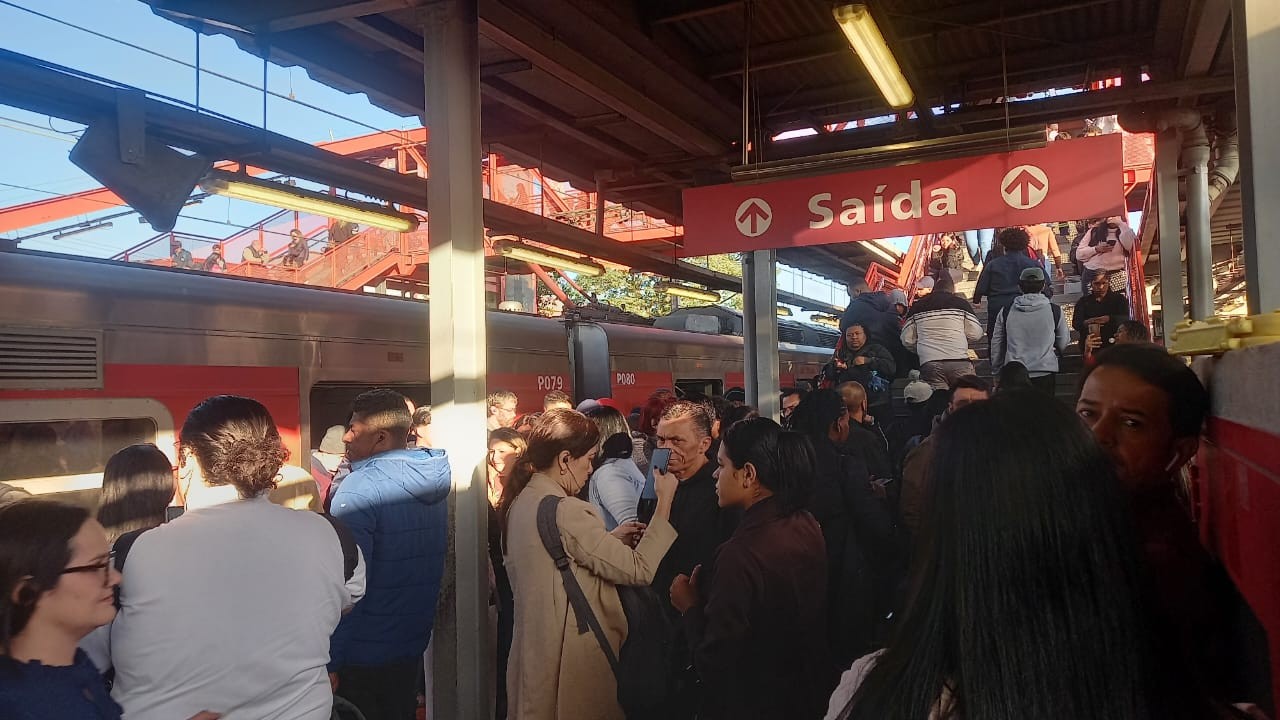
On Thursday, November 23rd, the third day of operations under new concessionaire Trivia Trens, two major train lines serving the Alto Tietê region experienced significant disruptions. Line 12-Safira saw its operations completely halted, while Line 11-Coral experienced partial service interruptions. According to Trivia Trens, the issues stemmed from a fire incident on a Line 12 train near Brás station, which caused a power supply failure. This power outage affected not only Line 12 but also Line 13-Jade and impacted the functioning of Line 11-Coral. Passengers on Line 12 were assisted off the train as a safety precaution. On Line 11-Coral, reports indicated unusual slowness, with one train delayed for approximately 11 minutes at Ferraz de Vasconcelos station. Another train was terminated early at Corinthians-Itaquera due to the power issues, with passengers advised to transfer to the Metro. The disruptions have led to a surge in passengers on the Metro's Line 3-Red, causing overcrowding. In response, the Metro has implemented operational strategies, including deploying two extra trains, opening transfers at Tatuapé and Corinthians-Itaquera stations earlier, and conducting intermediate maneuvers to manage passenger flow. Additional empty trains are being sent to stations with high passenger concentrations, and staff presence has been increased to assist commuters.
The ongoing operational failures on the Trivia Trens lines, occurring just days after assuming control, highlight significant challenges in the transition of public transport infrastructure. These disruptions, particularly the fire incident and subsequent power outage, raise questions about the thoroughness of pre-transfer assessments and the readiness of the new operator's systems and personnel. The cascading effect on connected lines and the Metro system underscores the interconnectedness of public transit networks and the critical need for robust contingency planning. As the region relies heavily on these services, sustained unreliability could erode public trust and necessitate a review of the concession agreement's performance metrics and oversight mechanisms. Future considerations should include more stringent operational readiness checks and performance guarantees to mitigate such widespread impacts on commuters.
AI-generated to prompt reflection — not editorial opinion, not advice, not a statement of fact. How this works.