New Strategy Might Reveal Dark Matter's True Nature
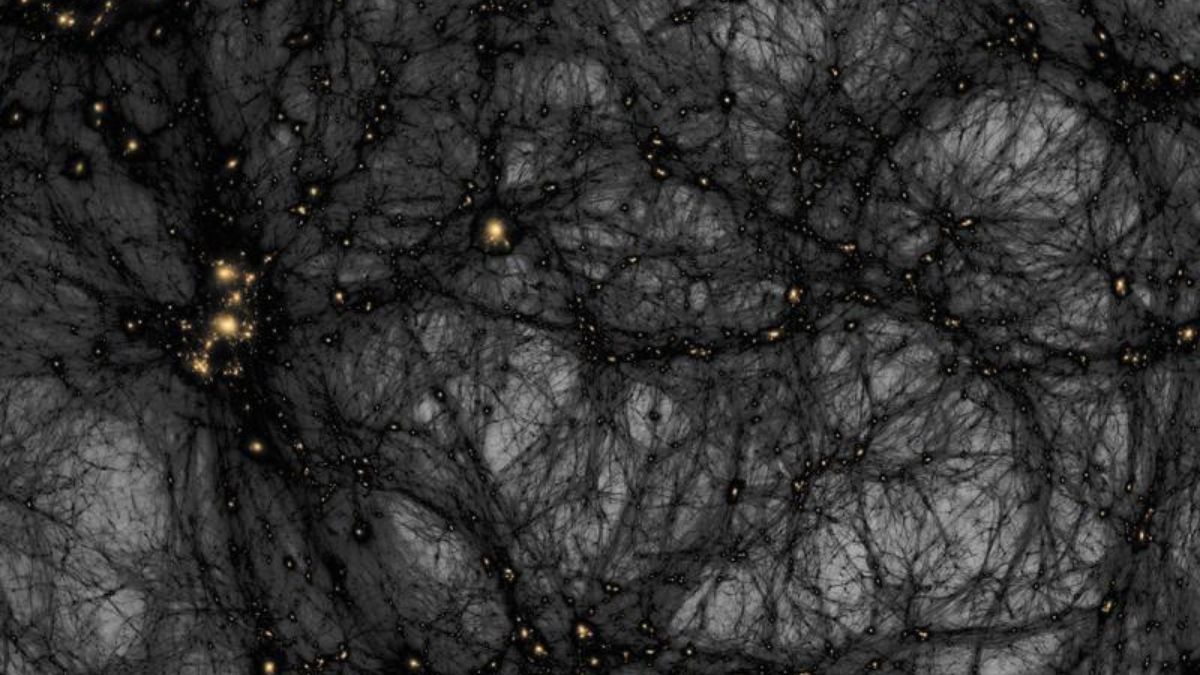
A novel approach is being developed that could finally shed light on the mysterious nature of dark matter. Scientists are exploring new strategies to directly detect and understand this elusive substance that constitutes a significant portion of the universe's mass. Current theories suggest dark matter interacts gravitationally but does not emit, absorb, or reflect light, making it invisible to conventional telescopes. This lack of direct observation has led to numerous hypotheses about its composition, ranging from weakly interacting massive particles (WIMPs) to axions. The proposed strategy aims to overcome these observational challenges by looking for indirect evidence or novel interactions. If successful, this research could confirm or refute existing models and potentially reveal that dark matter is transforming into unusual particles that permeate the cosmos, influencing its gravitational structure. The scientific community is hopeful that this new direction will lead to a breakthrough in one of physics' most profound mysteries.
The pursuit of understanding dark matter highlights a fundamental challenge in empirical science: observing phenomena that do not interact electromagnetically. Current strategies rely on indirect detection through gravitational effects or potential rare interactions. This ongoing research reflects a persistent effort to bridge the gap between theoretical models and observational evidence. Future advancements may depend on developing novel detection technologies or theoretical frameworks that allow for more direct probing of dark matter's properties. The potential discovery of dark matter transforming into new particle types could necessitate a revision of the Standard Model of particle physics and deepen our comprehension of cosmic evolution and structure formation over the next decade.
AI-generated to prompt reflection — not editorial opinion, not advice, not a statement of fact. How this works.
