New study challenges dark matter's existence based on Bullet Cluster data
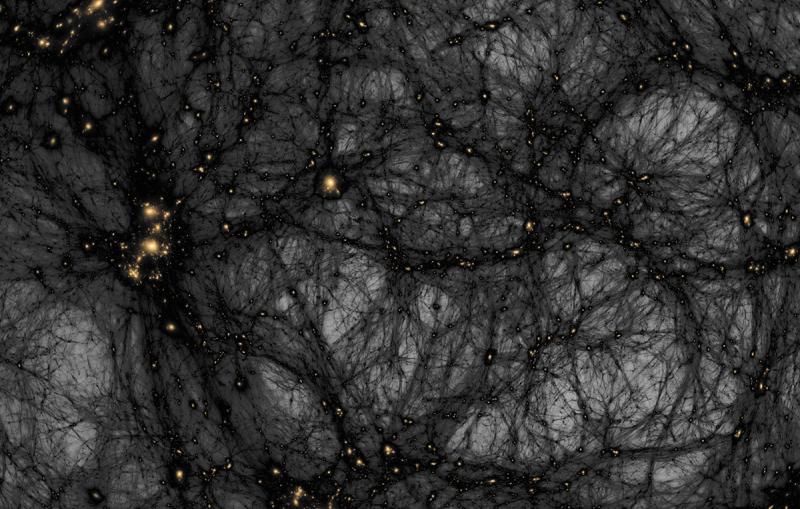
A recent study spearheaded by the University of Bonn is casting doubt on the very existence of dark matter, a concept considered a cornerstone of modern cosmology. The research team has introduced novel data derived from observations of the Bullet Cluster. This cluster, a well-known collision of two galaxy clusters, has been a key piece of evidence supporting the existence of dark matter. However, the new findings suggest that the current understanding of dark matter may be flawed. The implications of this study could be profound, potentially requiring a significant revision of the standard cosmological model. If dark matter's existence is indeed disproven, scientists will need to develop alternative explanations for the gravitational effects observed in galaxies and galaxy clusters. This research opens up new avenues for understanding the composition and evolution of the universe.
This research probes the foundational assumptions of the standard cosmological model by re-examining evidence from the Bullet Cluster. The study's findings, if validated, could necessitate a paradigm shift in astrophysics, moving beyond the current dark matter hypothesis. Such a development would prompt a search for alternative gravitational theories or explanations for cosmic structure formation, potentially impacting our understanding of the universe's evolution and composition over the next decade. The scientific community will likely engage in rigorous peer review and further observational testing to reconcile these new data with existing frameworks.
AI-generated to prompt reflection — not editorial opinion, not advice, not a statement of fact. How this works.