New Study Challenges Dominant Human Skull Evolution Theory
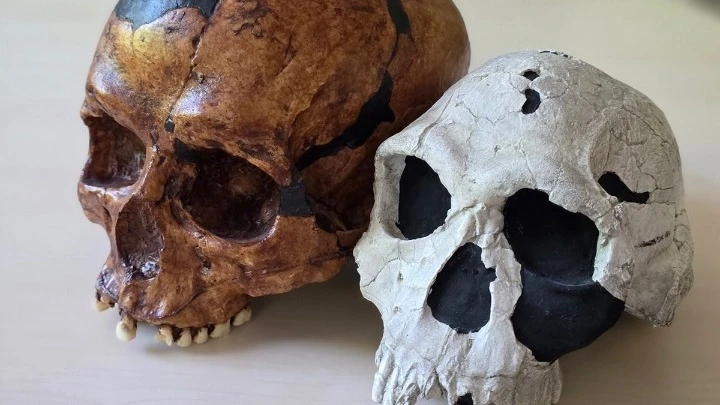
A recent study published in "Nature Communications" by Katerina Harvati and her research team presents new findings that challenge a widely accepted theory in paleoanthropology regarding human evolution. The prevailing theory suggests that the increase in brain size occurred concurrently with a reduction in facial and jaw size. However, this new research indicates that these developments may not have necessarily happened together as previously believed.
The study, led by Professor Katerina Harvati, implies a more complex evolutionary pathway for the human skull. The findings suggest that the relationship between brain expansion and facial morphology might be more nuanced than the traditional model allows. This research opens new avenues for understanding the intricate processes that shaped the human skull over millennia, potentially requiring a re-evaluation of existing evolutionary timelines and models.
This research introduces a potential paradigm shift in understanding human cranial evolution, moving beyond a singular, synchronized development model. By questioning the direct, concurrent relationship between brain size increase and facial reduction, the study invites a more complex, multi-stage evolutionary perspective. Future research may explore the specific environmental or genetic pressures that could have driven these traits independently or in a different sequence. This nuanced view could impact our understanding of hominin diversification and adaptation across different geological periods, prompting a re-examination of fossil evidence through this new lens.
AI-generated to prompt reflection — not editorial opinion, not advice, not a statement of fact. How this works.