New Study Suggests Dinosaurs Died Within Hours of Asteroid Impact
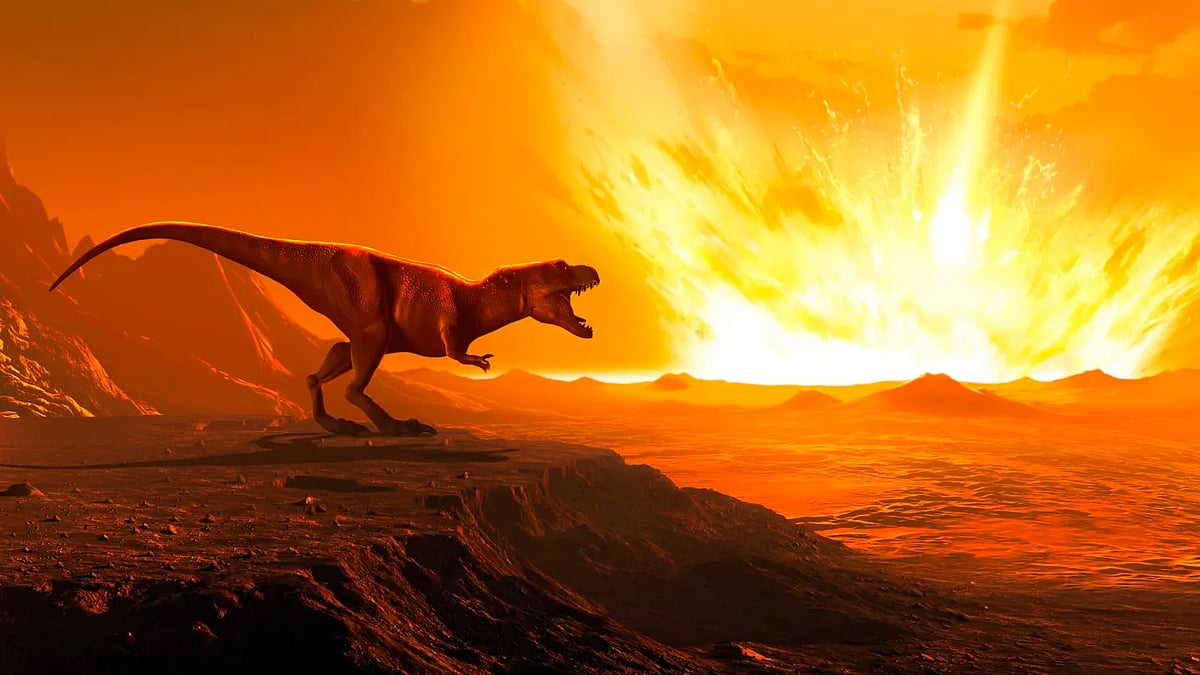
A recent study published in the Journal of Geophysical Research: Biogeosciences proposes that the extinction of dinosaurs, which occurred 66 million years ago following an asteroid impact in present-day Yucatan, Mexico, may have happened much faster than previously thought. Instead of a slow decline due to prolonged cold and starvation caused by dust clouds blocking the sun, researchers suggest dinosaurs likely perished within hours from a phenomenon termed 'flash-cooked.' This rapid demise was caused by superheated debris, known as spherules, raining back down on Earth after the impact. The asteroid, estimated to be 6 miles wide, struck with a force of 100 teratons of TNT, creating a 62-mile-wide crater, 2-mile-high tsunamis, and 620 mph winds. The impact ejected approximately 25 trillion metric tons of debris into the atmosphere. This debris, upon re-entry, acted like glowing projectiles, igniting global wildfires. Furthermore, the intense heat vaporized a significant amount of rock, creating a thick atmospheric layer that acted like a 'blanket,' increasing surface temperatures by at least 3.5 times. This intense heat would have been sufficient to instantly scorch a vast number of creatures and trigger widespread fires. While this rapid death theory is gaining traction, the study acknowledges that the older theory of slow starvation due to prolonged darkness and cold is not entirely dismissed. The atmospheric dust could have indeed blocked sunlight for years or decades after the initial heat event, leading to a prolonged ice age. However, more evidence is needed, particularly regarding the extent of wildfires in areas far from the impact's epicenter, to fully confirm the new findings.
This research reframes the dinosaur extinction event, shifting focus from a slow, drawn-out demise to an almost instantaneous catastrophe. The analysis highlights the immense energy released by the asteroid impact and its immediate thermal consequences, suggesting a 'flash-cooked' scenario. This perspective challenges previous understandings centered on prolonged environmental degradation. The study's methodology, involving computer simulations of atmospheric debris and heat transfer, provides a quantitative basis for these claims. While the immediate thermal event is emphasized, the analysis also acknowledges the potential for subsequent long-term climate shifts, such as prolonged darkness and cold, indicating a complex, multi-stage extinction process. Further investigation into the global extent of wildfires is crucial for a comprehensive understanding of the event's dynamics and the precise mechanisms that led to the end of the dinosaur era.
AI-generated to prompt reflection — not editorial opinion, not advice, not a statement of fact. How this works.
