New Theory Explains How Water Flow Rotates Sprinklers, Solving Feynman's Puzzle
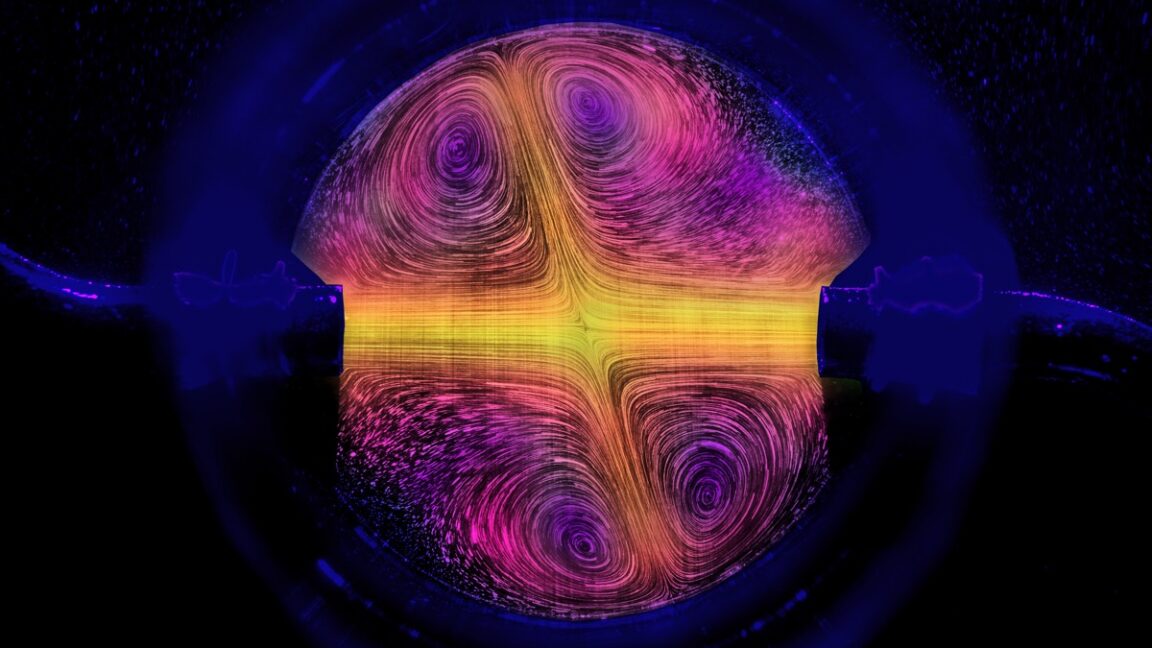
A recent study has validated the "momentum flux theory," first proposed in 2024, which explains the rotational mechanics of sprinklers. This theory specifically addresses how the angular momentum of flowing water is the primary driver behind the spinning motion observed in sprinkler systems. The findings confirm that this principle can solve the long-standing "reverse sprinkler puzzle" posed by physicist Richard Feynman. The research demonstrates that understanding the momentum flux of water is key to predicting and controlling sprinkler rotation. This scientific breakthrough offers a comprehensive explanation for a phenomenon that has puzzled engineers and physicists for years. The "momentum flux theory" provides a robust framework for analyzing fluid dynamics in rotational systems. It clarifies how the direction and speed of water expulsion directly influence the sprinkler's spin. This research has implications for the design and efficiency of various irrigation and fluid-handling technologies.
This study provides a physics-based explanation for a common mechanical phenomenon, resolving a theoretical challenge posed decades ago. By focusing on the fundamental principle of momentum flux, the research offers a rational framework that moves beyond anecdotal observations or complex empirical models. The application of this theory to both theoretical puzzles and practical "silly sprinklers" highlights the power of fundamental physics in understanding everyday technology. Future applications could involve optimizing sprinkler designs for water conservation or exploring similar rotational dynamics in other fluid systems, potentially impacting fields from industrial engineering to microfluidics.
AI-generated to prompt reflection — not editorial opinion, not advice, not a statement of fact. How this works.