New Triassic Predator, Eosphorosuchus lacrimosa, Discovered After 80 Years
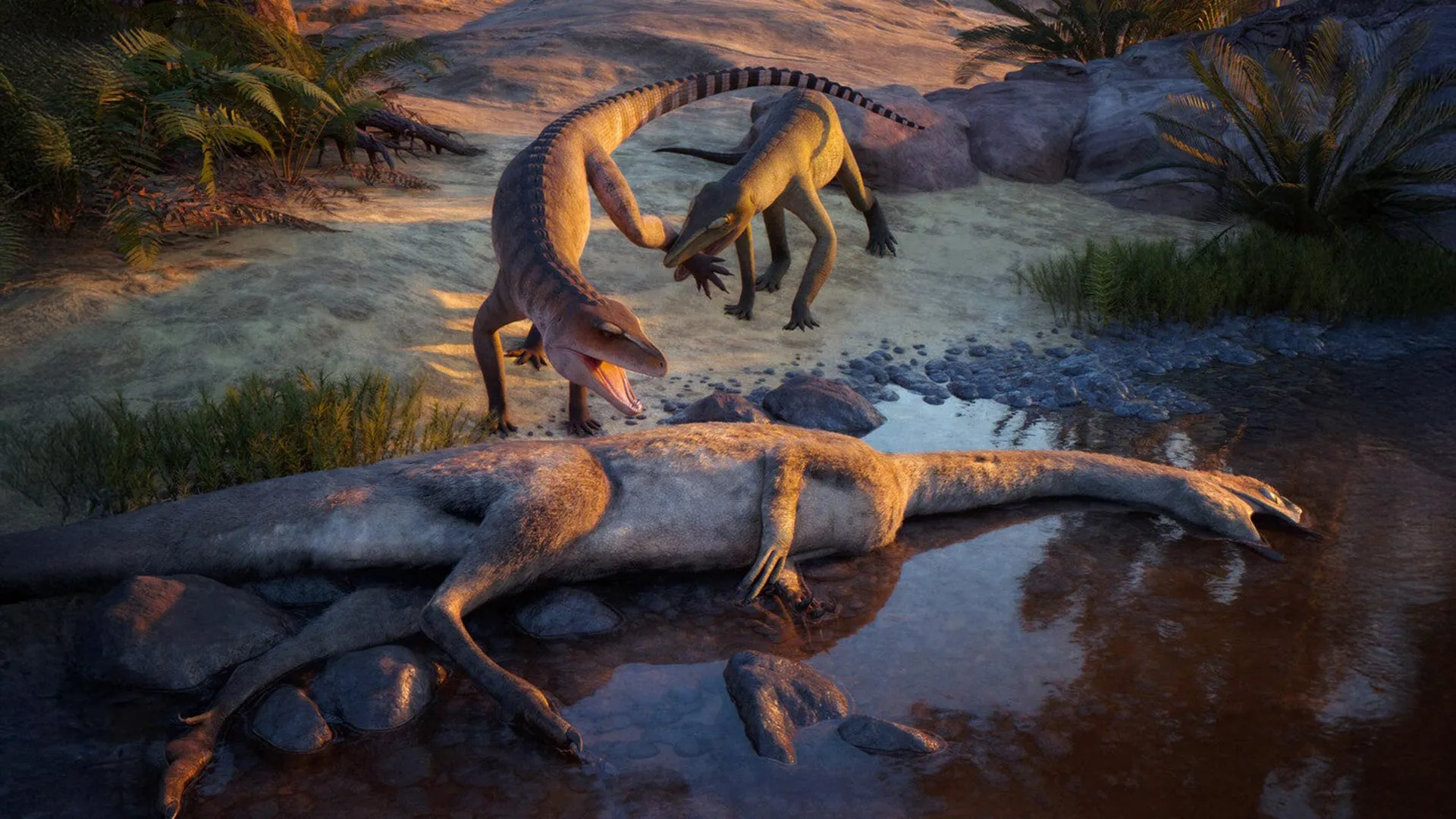
A fossil that had been overlooked for approximately 80 years has led to the identification of a previously unknown predatory species from the Triassic period. This ancient crocodile relative, named Eosphorosuchus lacrimosa, lived around 210 million years ago in the region that is now New Mexico. The predator was roughly the size of a jackal and possessed distinct anatomical features suited for hunting. These included a reinforced skull and powerful jaw muscles, indicating its capacity for strong bites. Furthermore, its short snout was adapted for confronting and subduing larger prey animals, suggesting a significant role in its ancient ecosystem.
The rediscovery of Eosphorosuchus lacrimosa highlights the ongoing potential for significant paleontological findings within existing museum collections. This event underscores the importance of meticulous curation and re-examination of historical specimens, as scientific understanding evolves with new analytical techniques. The predator's morphology suggests an ecological niche involving predation on substantial prey, offering insights into the complex food webs of the Late Triassic. Future research could explore comparative biomechanics of its skull and jaw to better understand its predatory capabilities relative to other contemporary fauna, potentially revealing more about the selective pressures driving evolutionary adaptations in that era.
AI-generated to prompt reflection — not editorial opinion, not advice, not a statement of fact. How this works.